Eclipses never cease to fascinate. Whether it's their rarity, the extensive lore, or the wonderful sense they can give of being part of the celestial clockwork, few astronomical events can compare in either hype or reality. I'm as infected as anyone but those diehard eclipse-chasers, so here are some samples. For much more information on past and future eclipses, you can't do better than Fred Espenak's eclipse page at NASA Goddard.
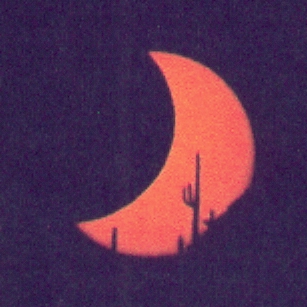
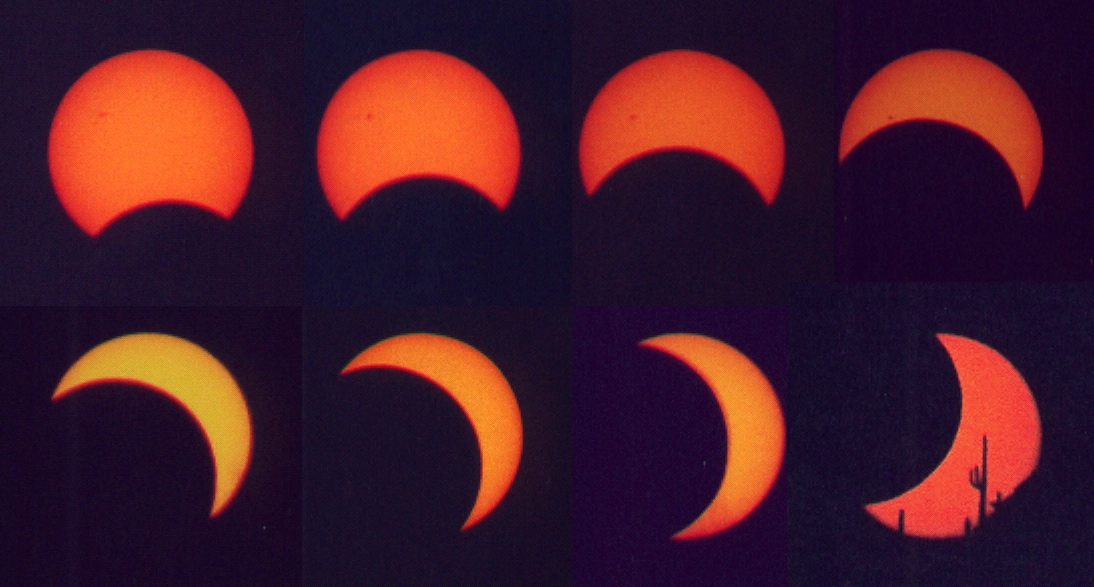
First up, the June 10, 2002, eclipse, seen as annular over the Pacific Ocean and a tiny bit of Baja California. My location for the partial phases can be derived from the following image sequence.
This series was taken at 10-minute intervals starting at 1730 MST. The equipment was pretty primitive - a 35mm Canon camera, Spiratone zoom lens at 230mm, doubler, and Thousand Oaks solar filter about 25mm in diamater in front of the lens. (Duct tape, the end of a can for cake icing, and fingers formed a three-fold system to make sure the filter didn't go anywhere). Exposures were 1/100 second on Kodacolor 100 film (a guess based on comparing the filtered Sun's brightness to sunlit landscape). Truth in advertising compels me to note that the "sunset" image isn't over the geometric horizon, but over a carefully chosen bit of the Tucson Mountains. The only manipulation of the scanned images, after cut-and-pasting, was a mild stretch to match the contrast of two images that didn't quite match the others in exposure. That last shot is the one I went after, and is worth the cholla spines I had to pull out of my backside.
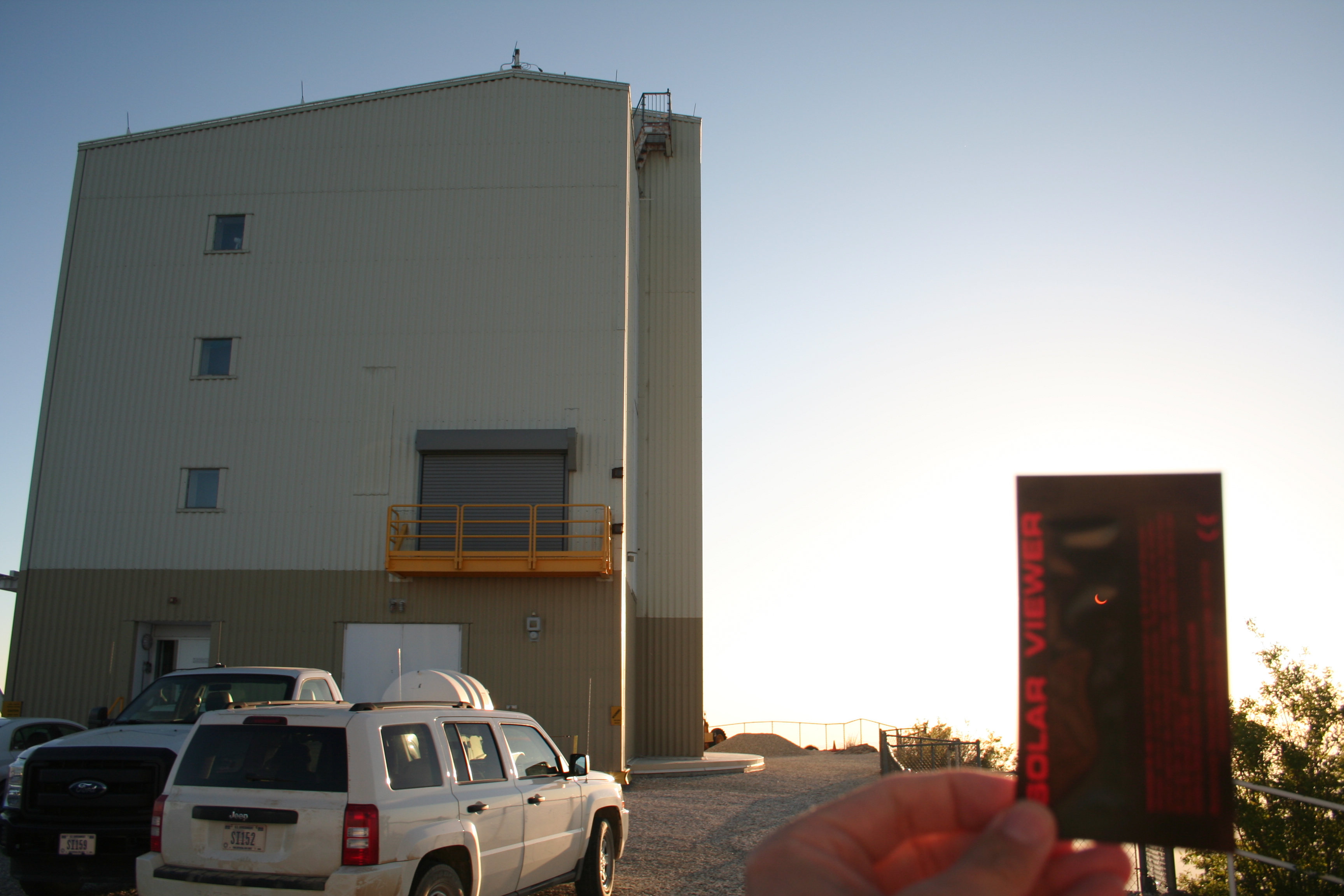
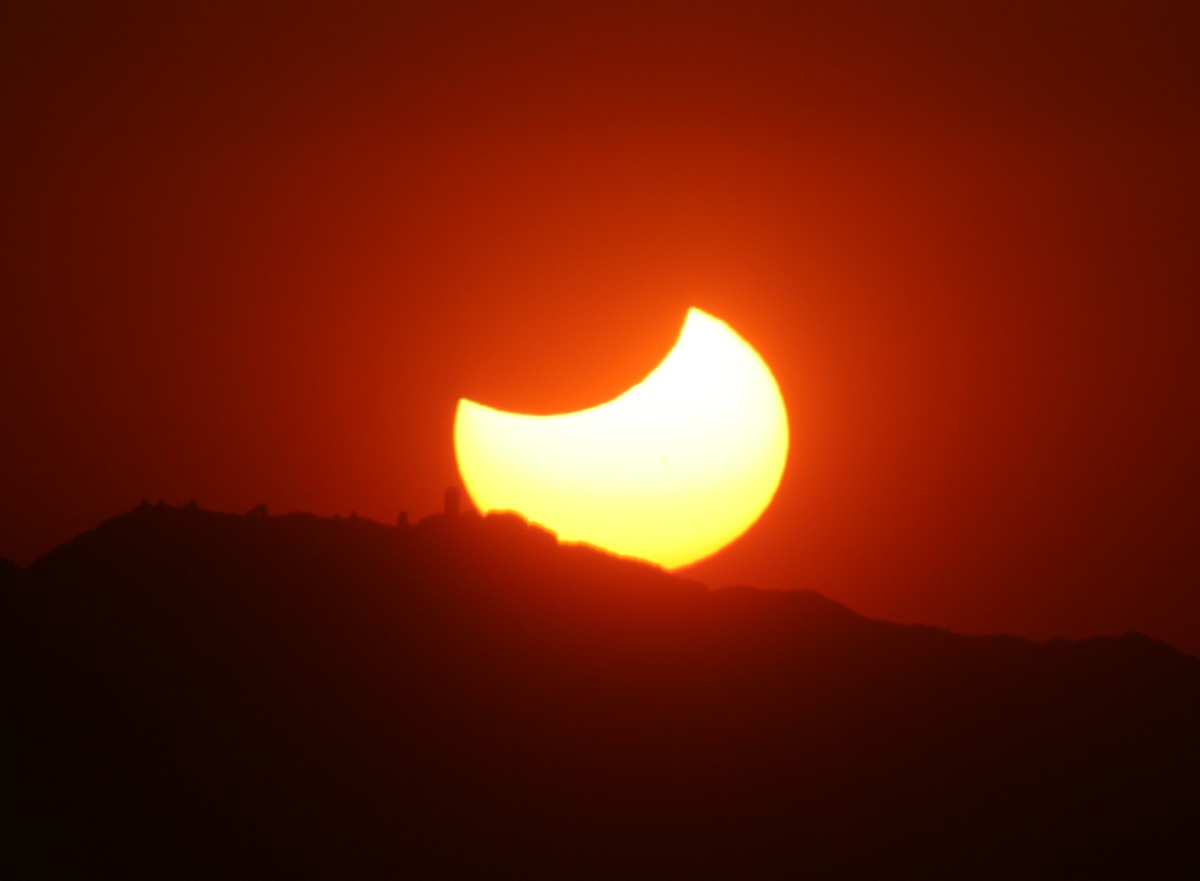
A 2012 eclipse found me back in Arizona, for a single night at the MMT Observatory with a student getting her dissertation data. Whle the centerline of this annular eclipse on May 20, 2012, passed through the northern part of the state (so we missed that), we were rewarded with a deep partial phase and, from our vantage point on Mt. Hopkins, the still-eclipsed sun setting behind Kitt Peak National Observatory about 80 km away. Another added bonus - at deepest crescent-like phase for the eclipse, the gap between the telescope enclosure and a support building acted as a partial pinhole, projecting a recognizable, giant solar image on the slopes of Mt Wrightson just to the east. The image of the setting Sun was worth the trouble - my 400mm lens in carry-on luggage got me pulled out for hand inspection while boarding the plane.
|
 |
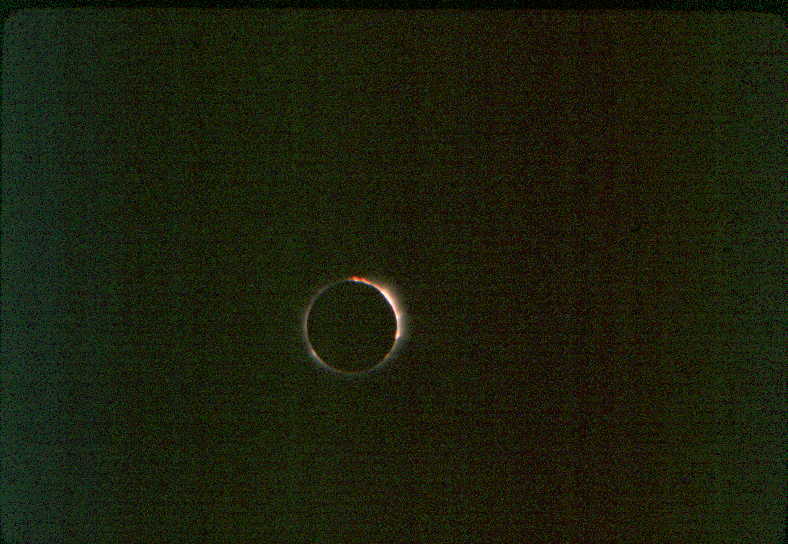
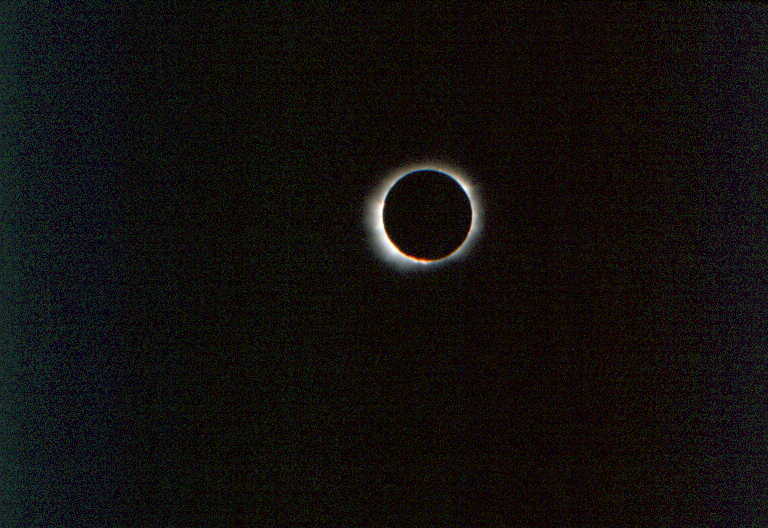
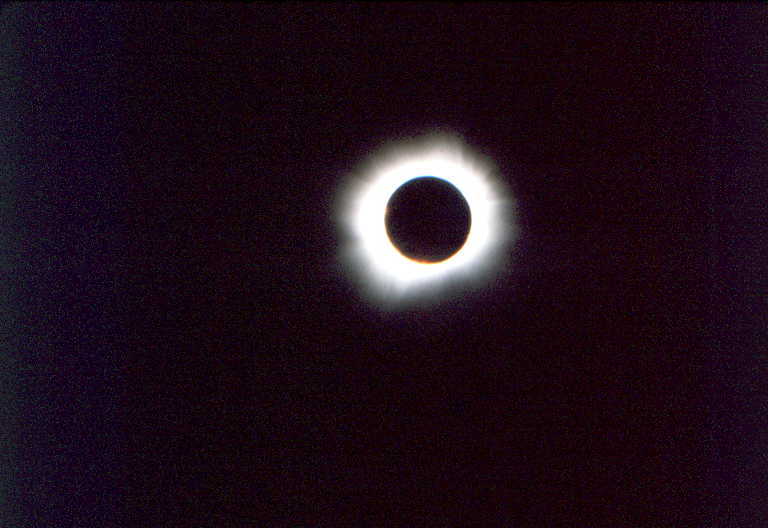
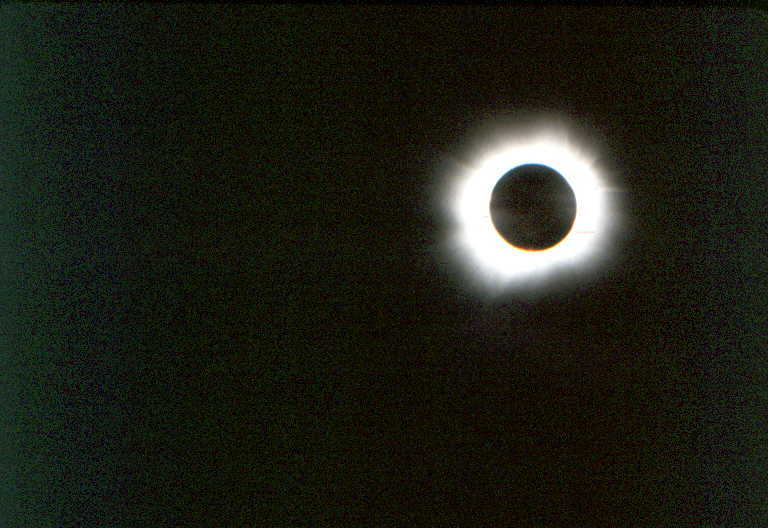
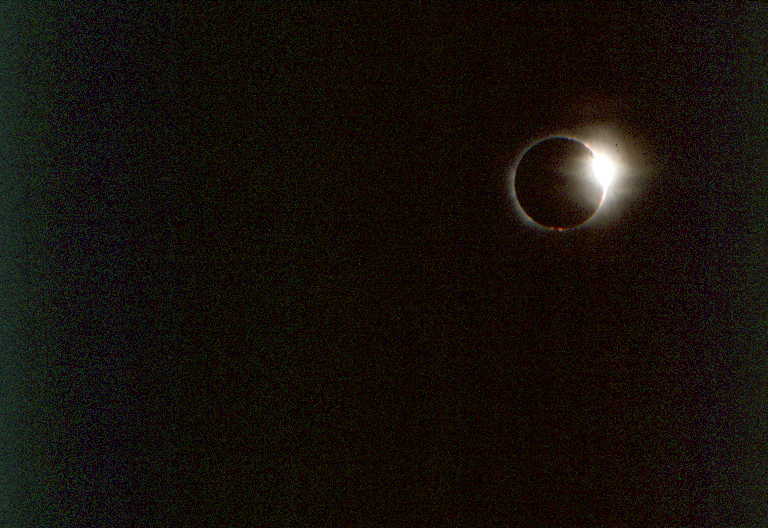
Moving back in time, my sole experience to date with a total solar eclipse was for the February 26, 1979, event, caught in Oregon. Several groups of students from UCSC drove up. Among these, we managed to find a clear patch of sky with about 20 minutes to go before totality (that's the fastest my old Mercury ever went). An 8mm movie shows the clouds pulling off the solar disk as the diamond ring faded. The duration was just over two minutes. This series of pictures was scanned from slides done on High-Speed Ektachrome, with exposures from 1/500 to 2 seconds behind a 400mm lens at f/6.3. The final image shows the ending diamond-ring effect.
 |
 |
 |
 |
 |
 |
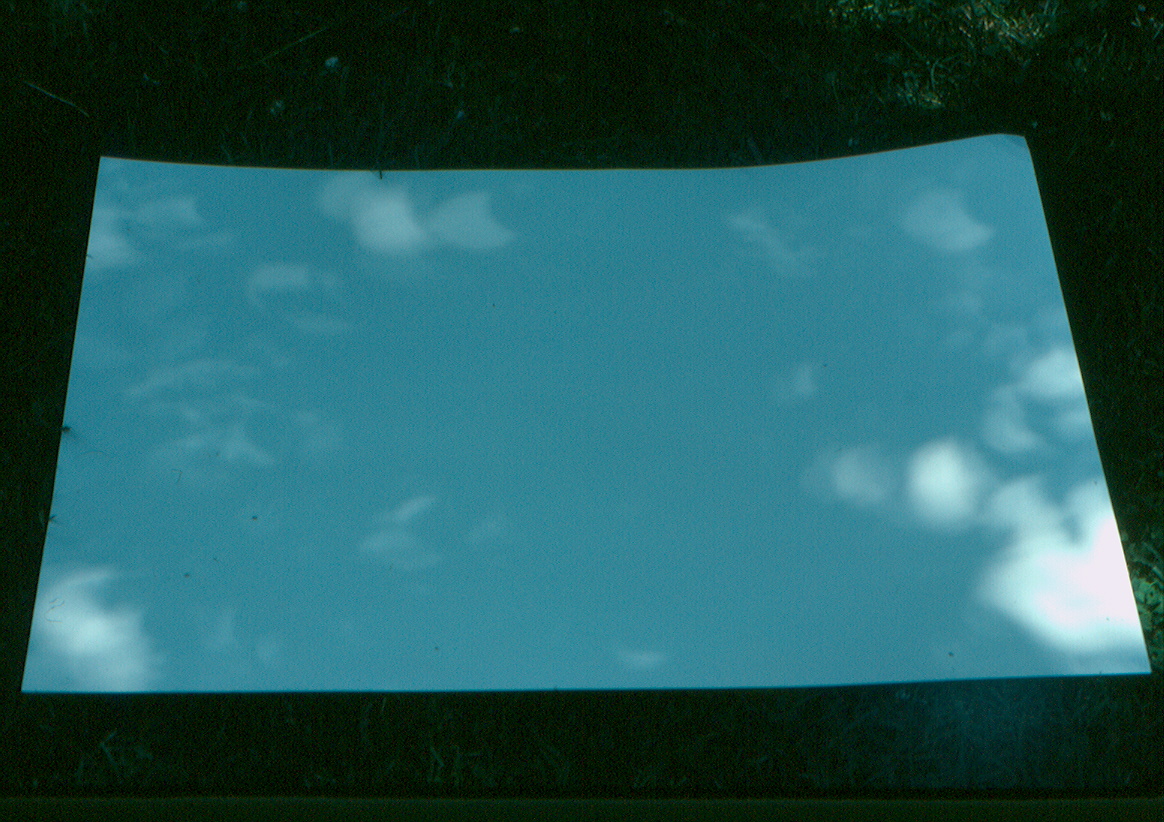
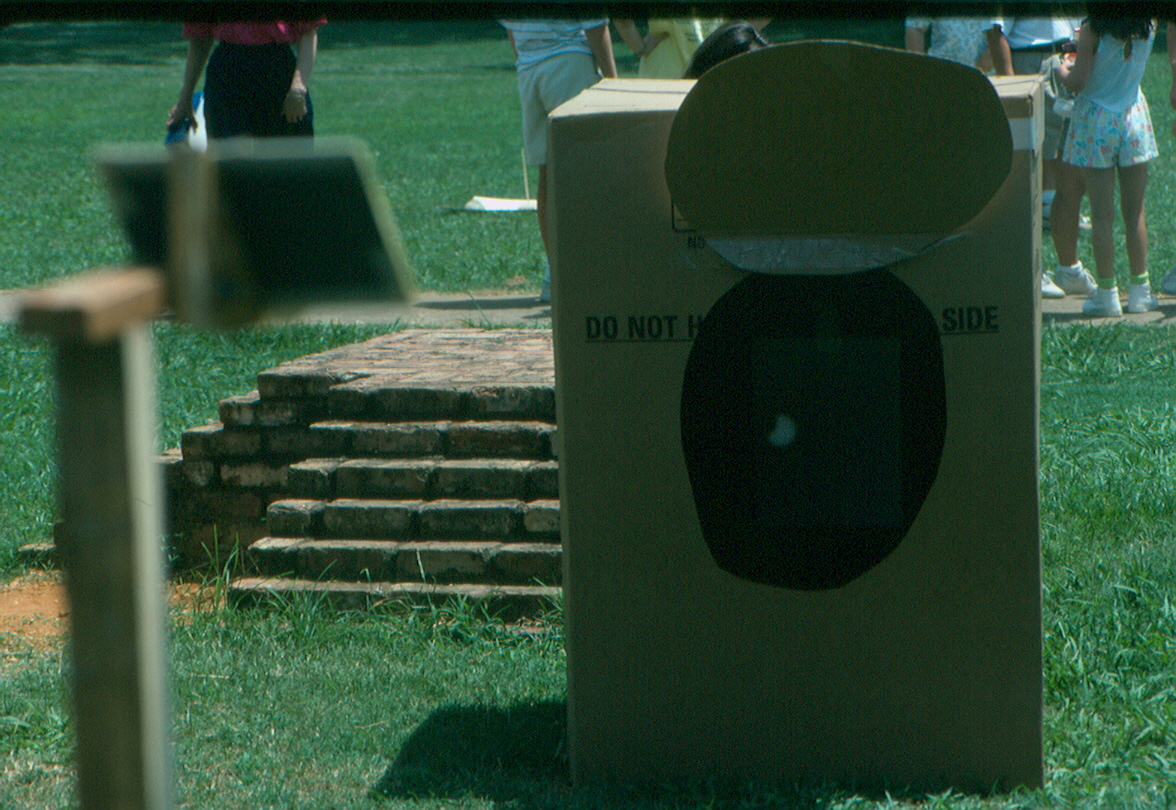
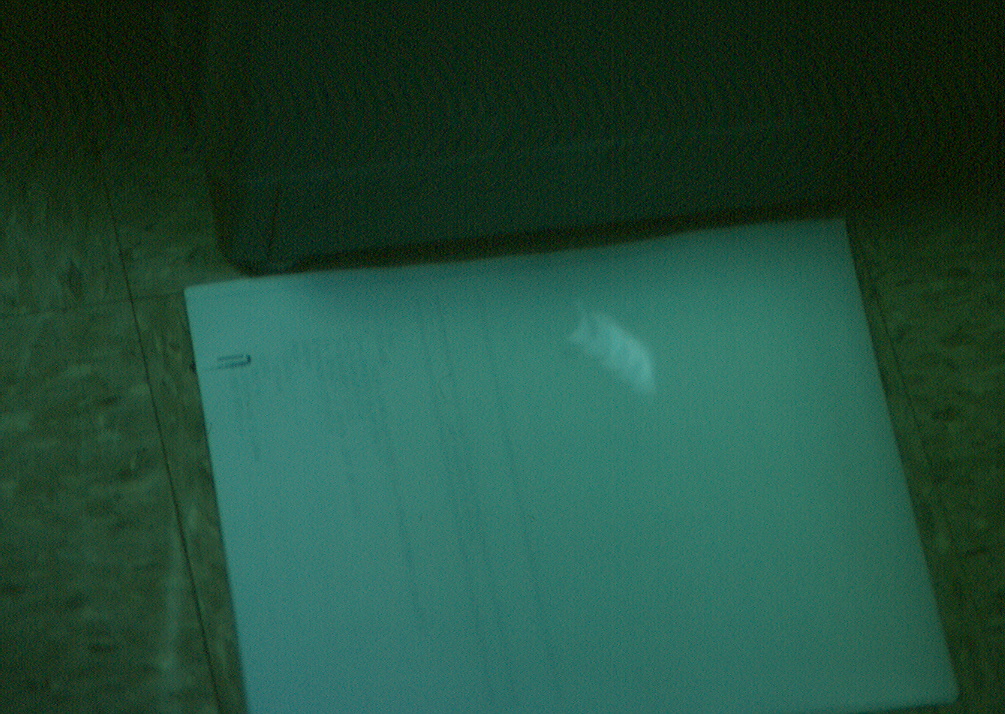
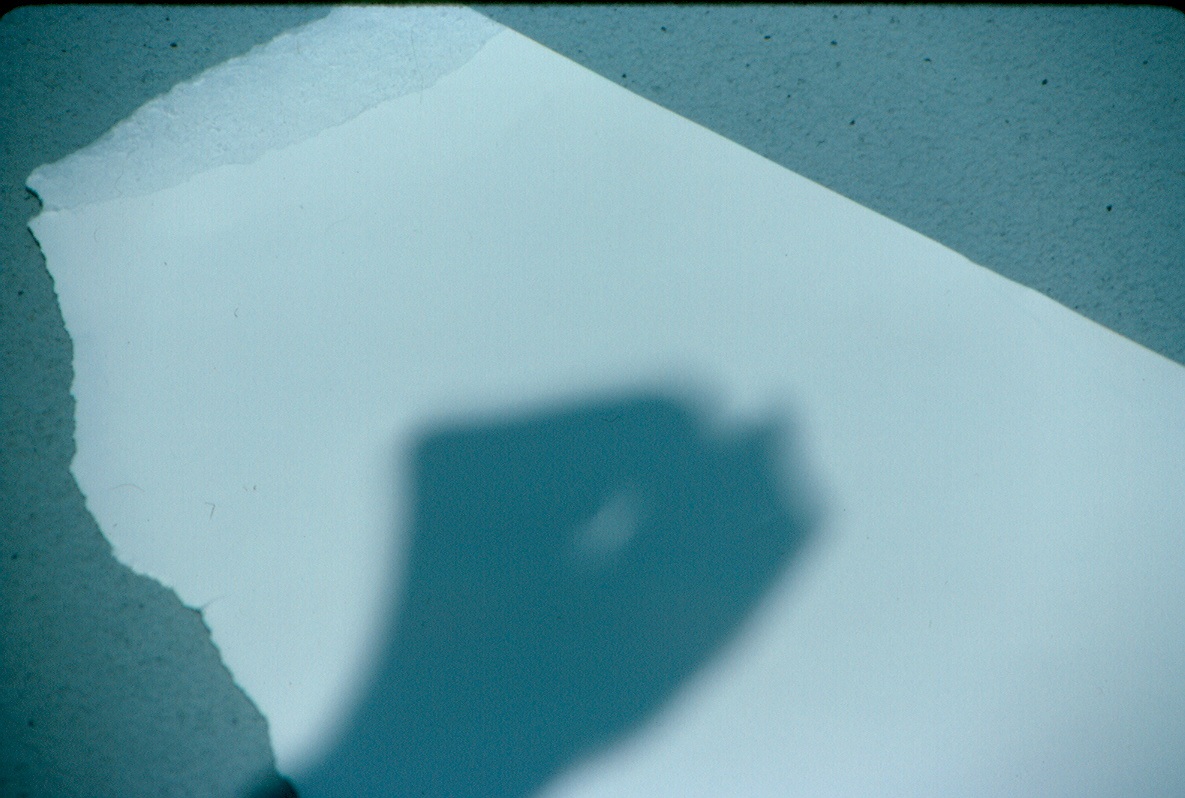
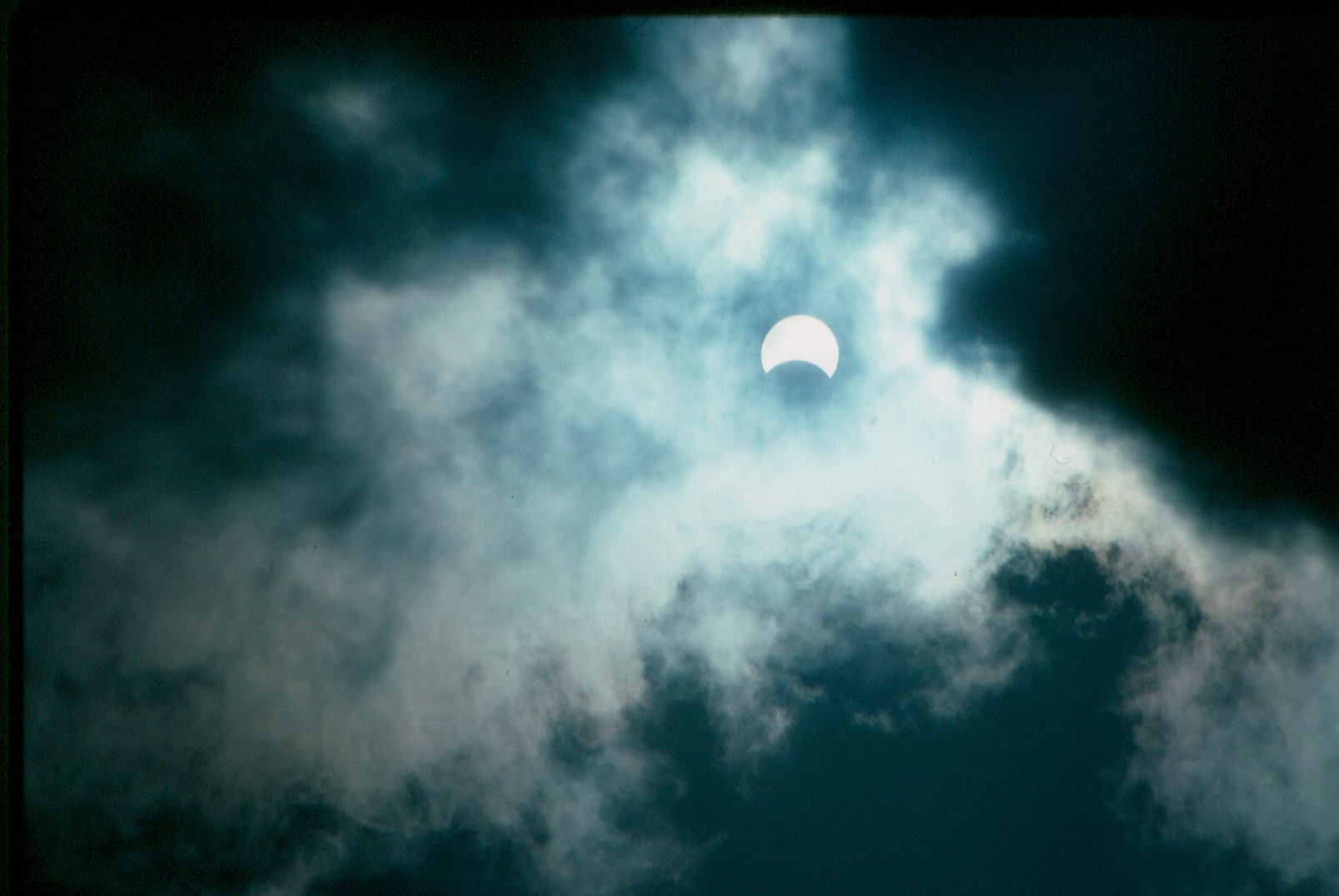
The great solar eclipse of July 1991 was partial with about 80% coverage from Tuscaloosa, affording a nice demonstration of ways to observe partial eclipses. We saw pinhole images from tall trees, holes in window blinds, mirrors, and plain pinholes. We also had a well-attended public viewig, projecting the image from the University of Alabama's 0.25-meter refractor (since replaced, and venerable even then).
|
 |
 |
 |
 |
 |
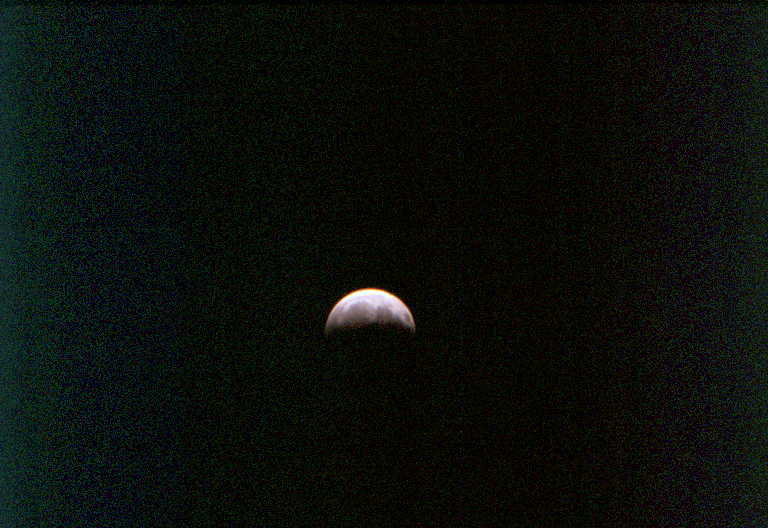 |
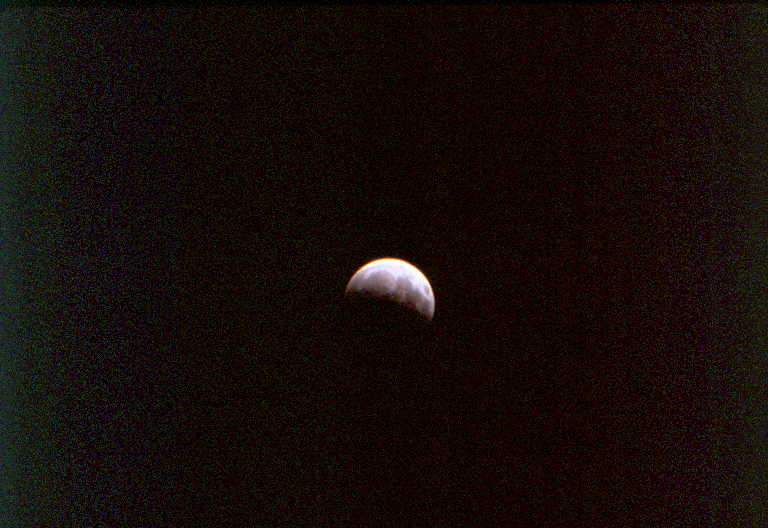
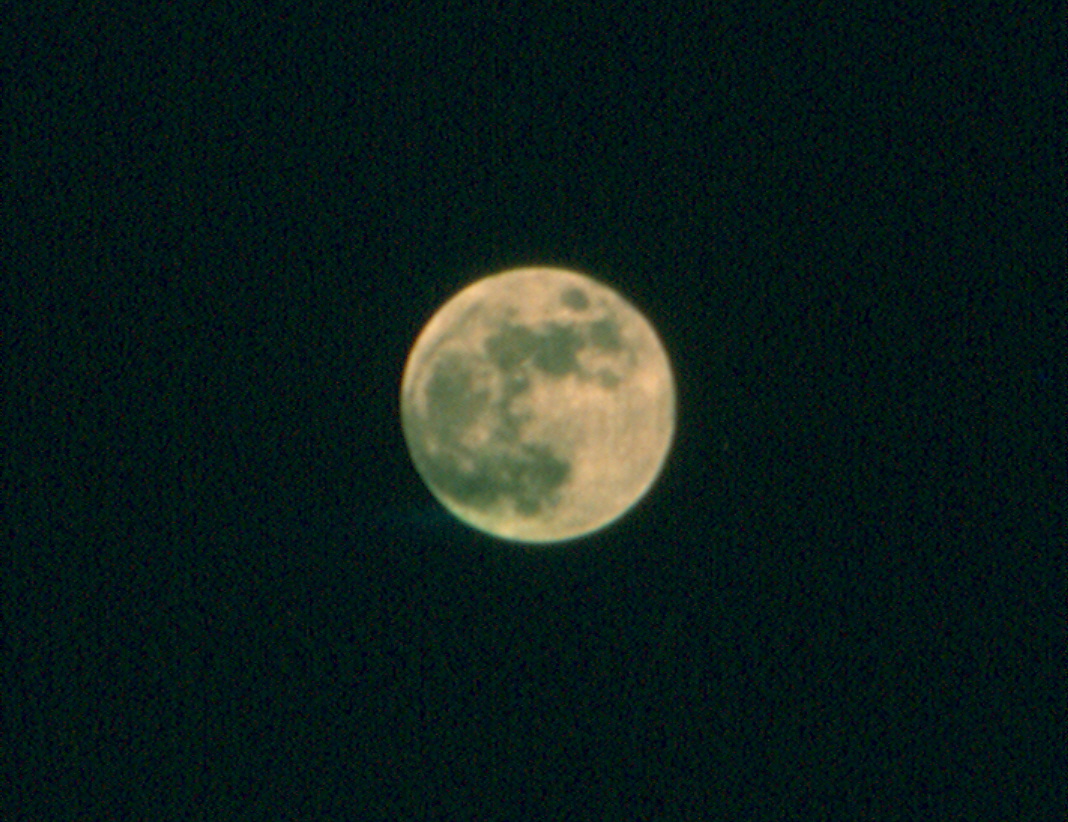
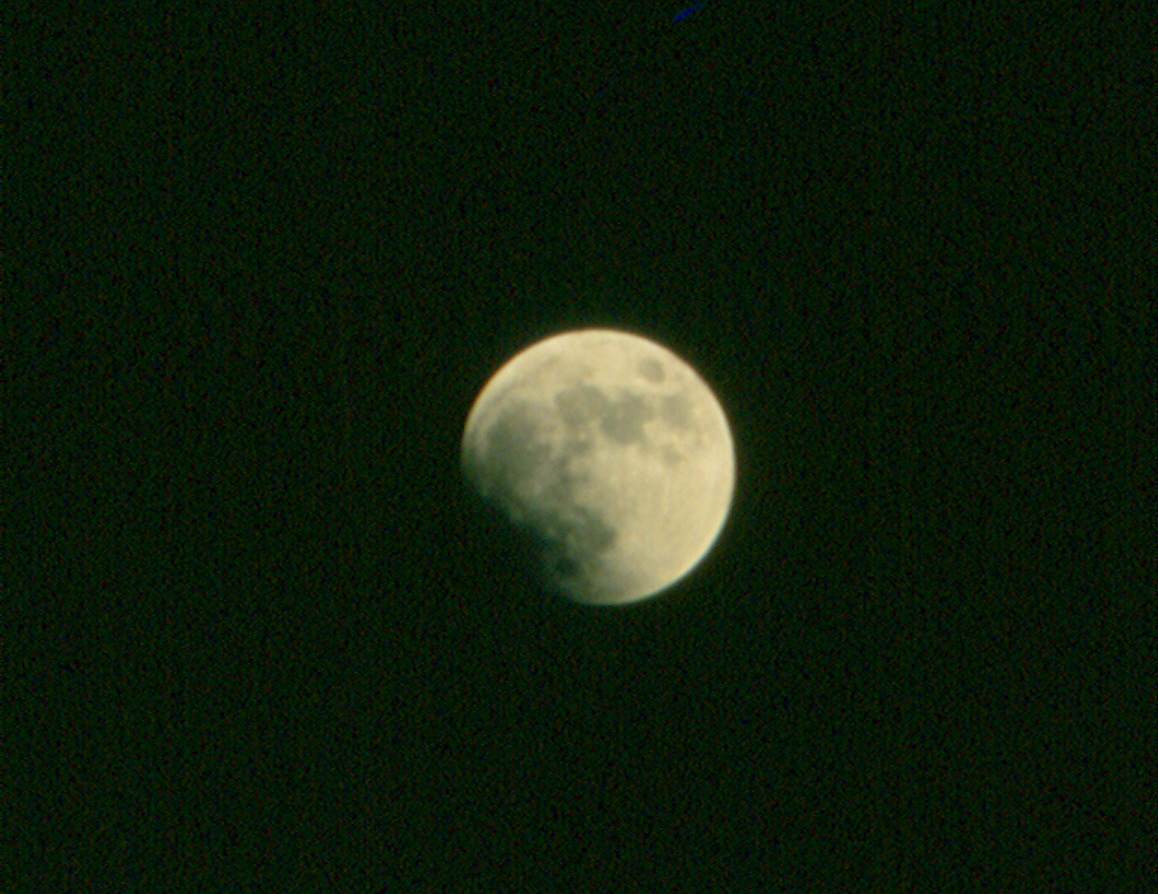
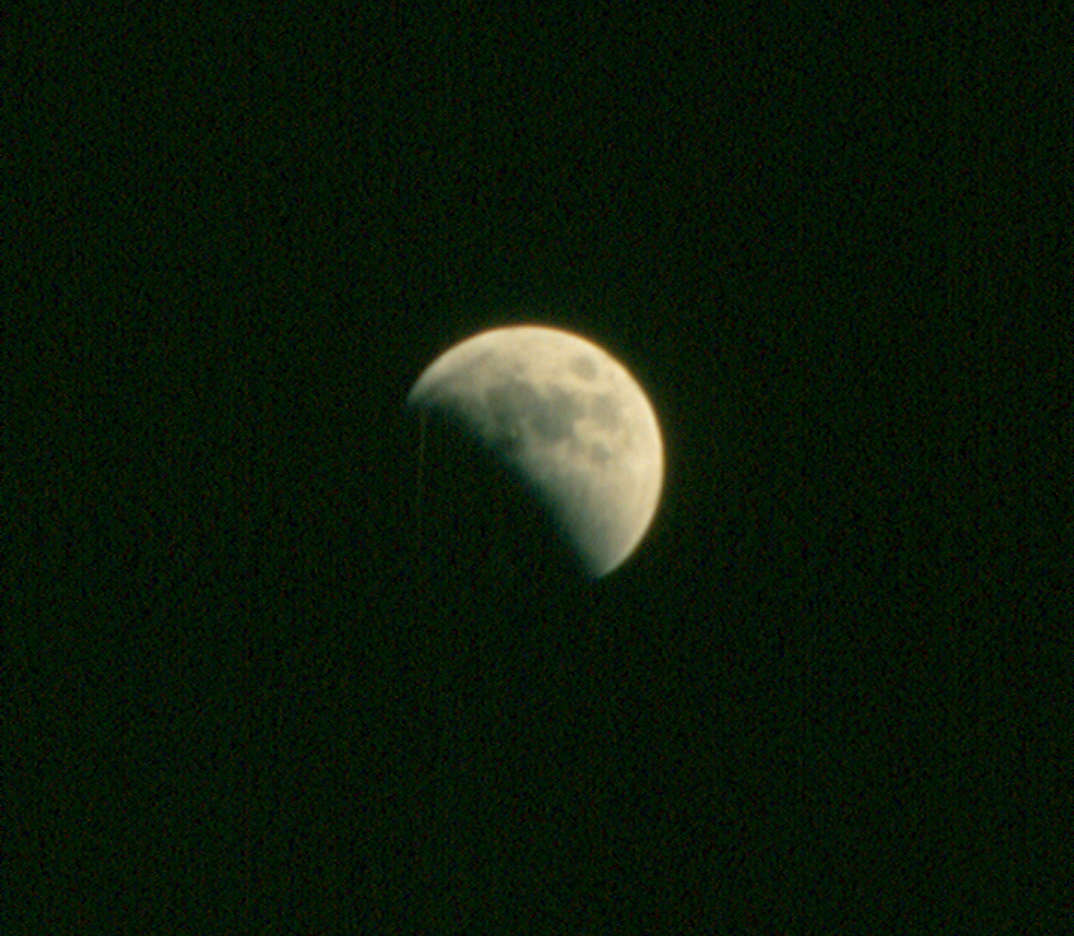
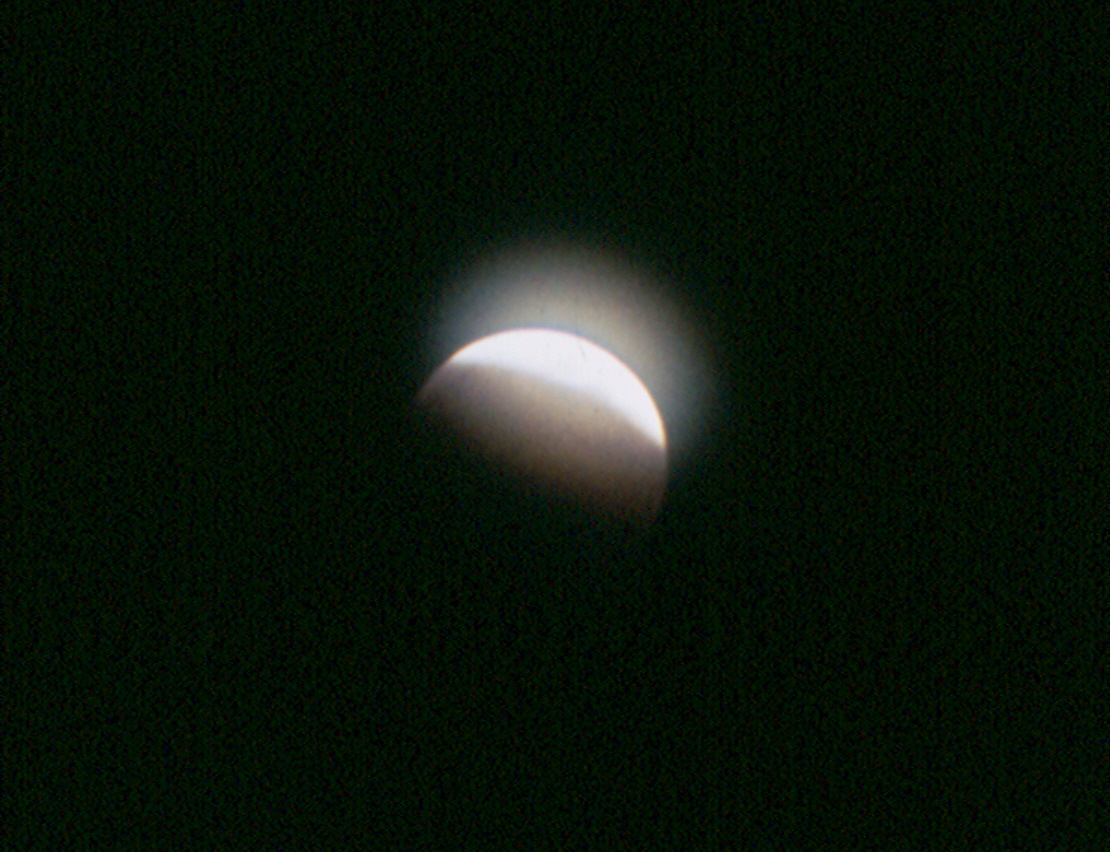
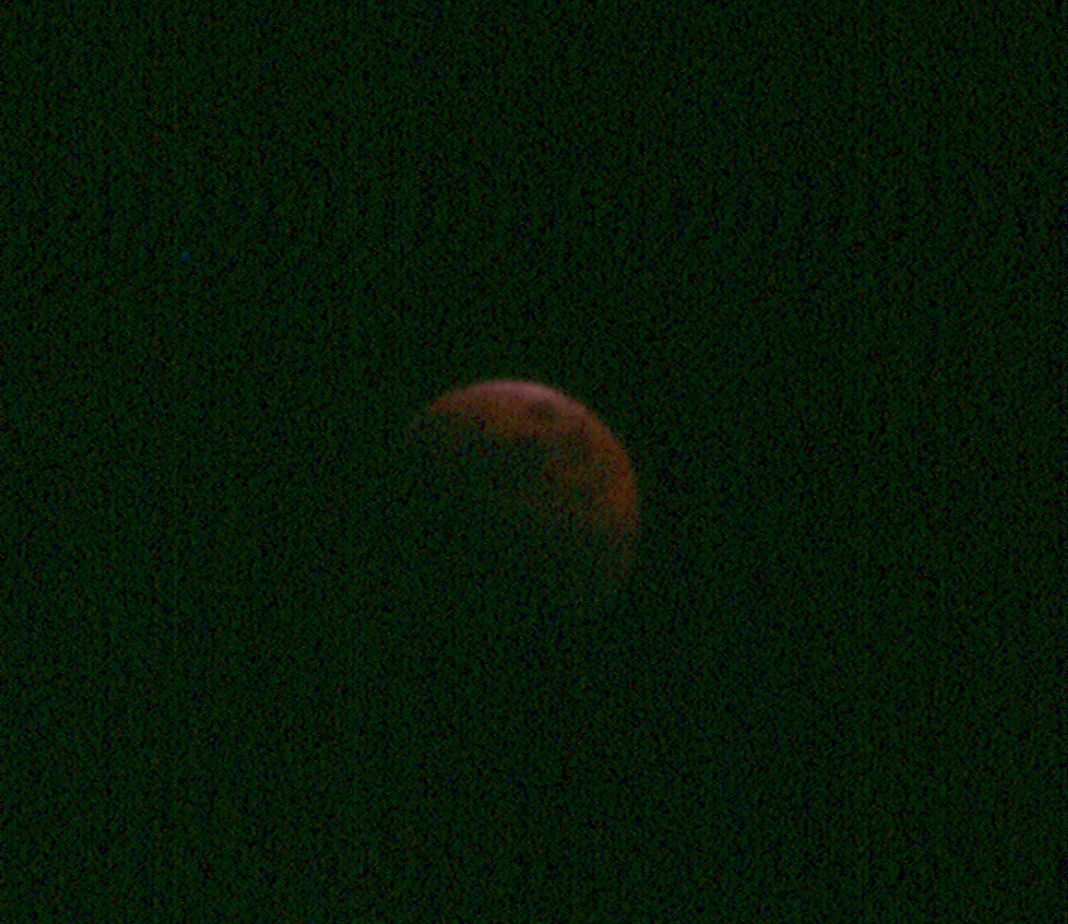
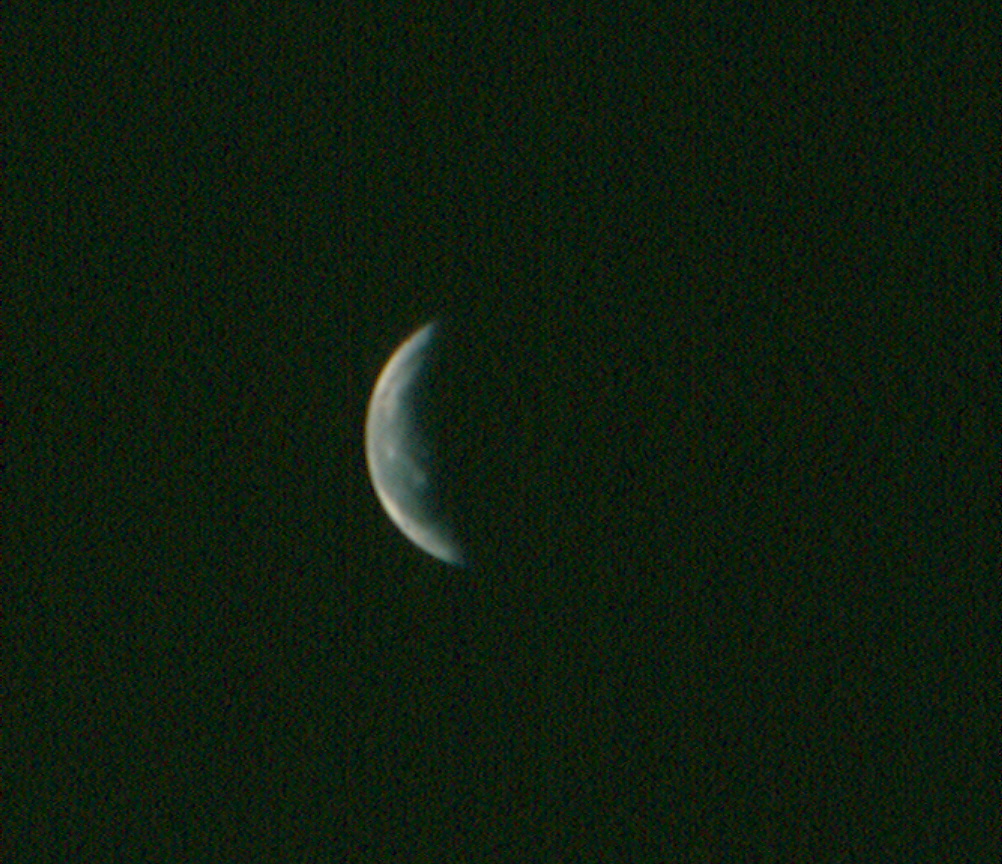
By May 25, 1975, I was able to get a nice series of the total lunar eclipse on slide film:
 |
 |
 |
 |
 |
 |
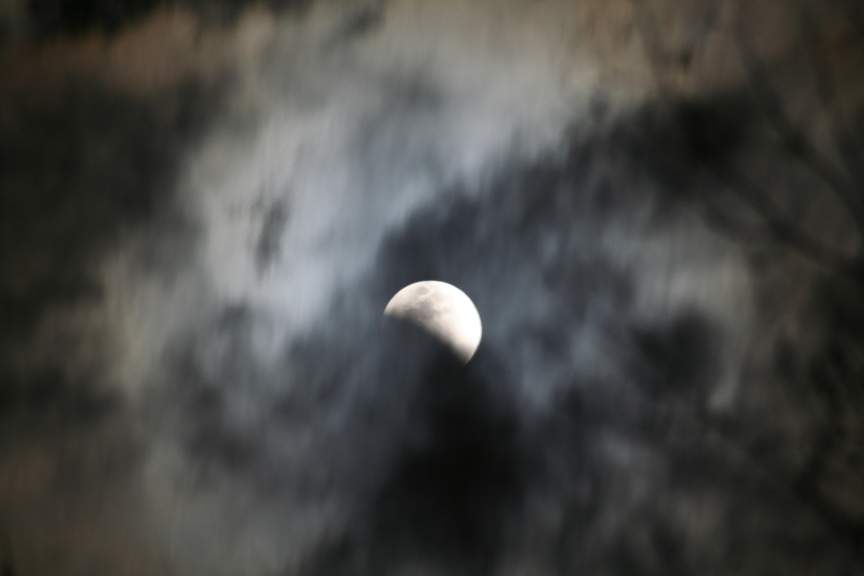
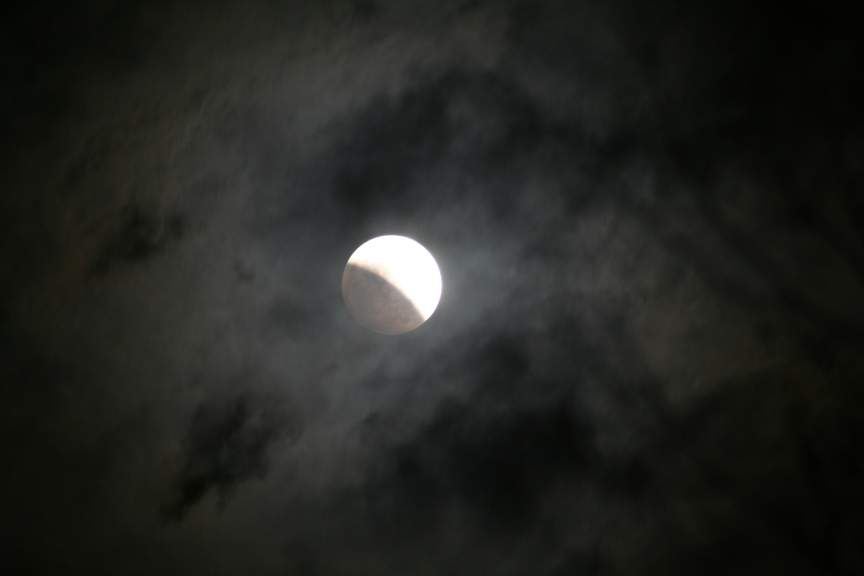
The February 2008 eclipse was memorable for me - for the fist time in 2 decades, I wasn't running a public viewing event so I could sit in the front yard and appreciate it calmly. We had passing clouds, which reminded me of atmospheric scenes from horror movies and made me remember this as the Werewolf Eclipse. I gave students credit for bringing me their own pictures - I got cell-phone pictures and video, camera views, and one shot through the spotting scope of a rifle complete with crosshairs. Aabama astronomy.
 |
 |
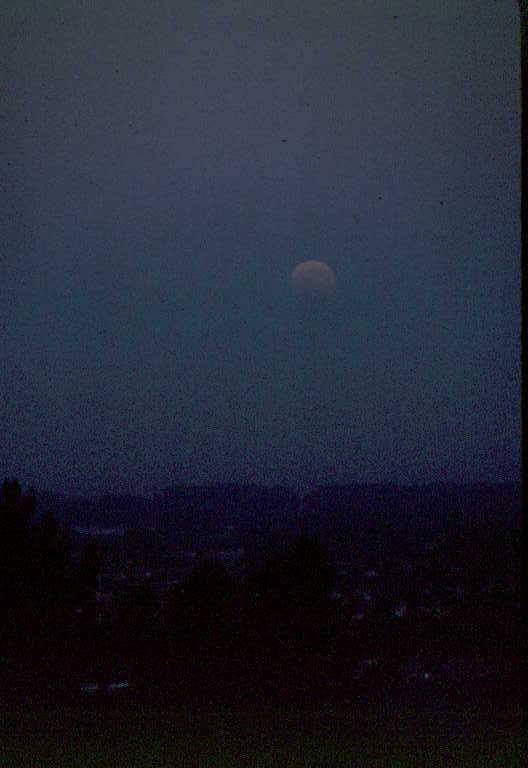
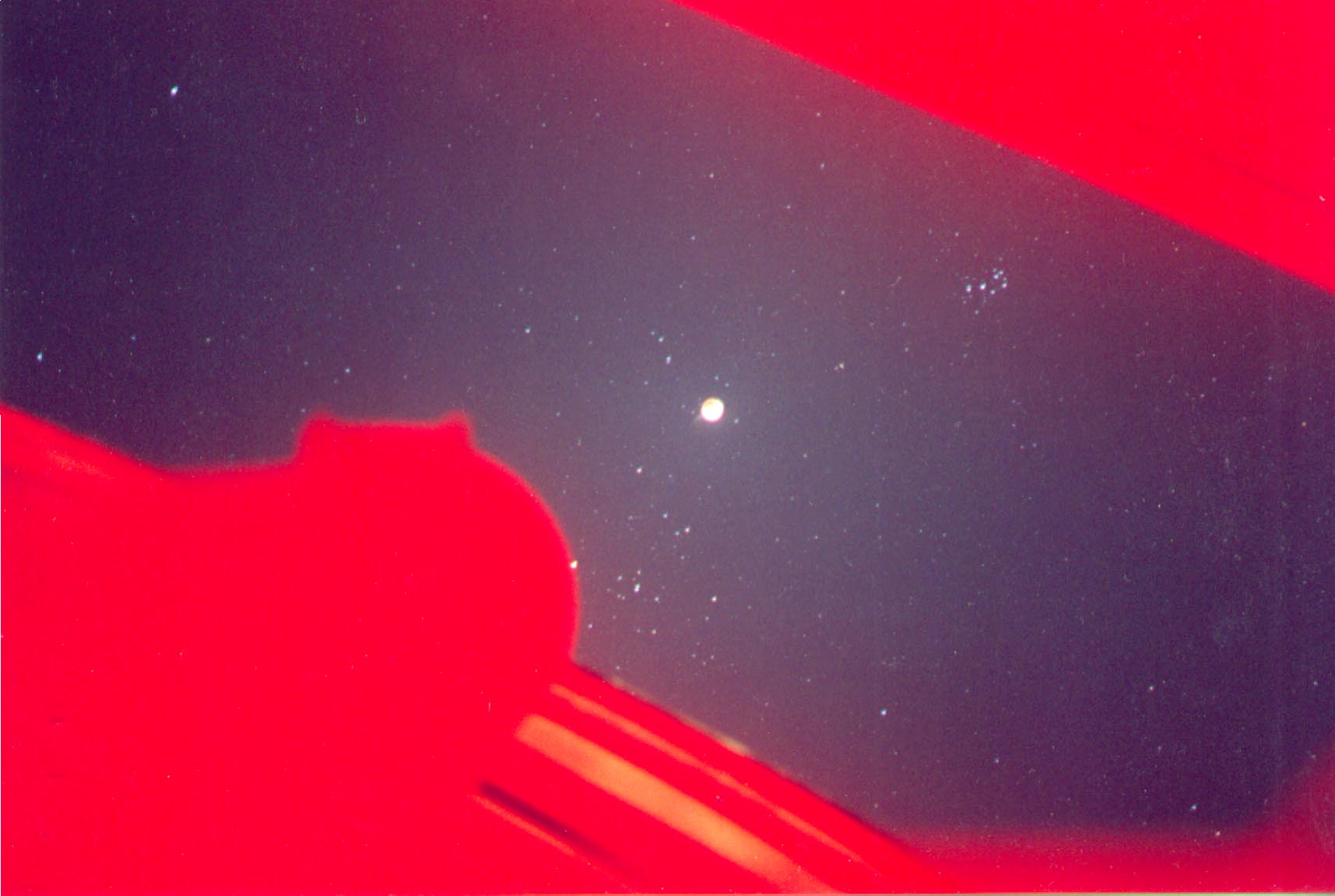
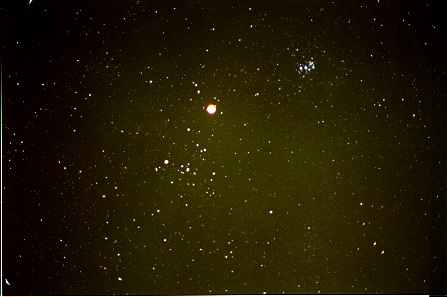
Here is a series of images of some memorable lunar eclipses. As seen from California, the partially eclipsed Moon of July 7, 1981, rose during twilight, letting us see the Earth's shadow not only on the Moon but tangentially on our own atmosphere, gviing a striking three-dimensional perspective. Slightly less than a year later the totally eclipsed Moon stood in front of the stars of Sagittarius on July 6, 1981 (this was taken from Lick Observatory while assisting a CBS film crew with a timelapse sequence). Then there are two images of the eclipsed Moon with the Pleiades and Hyades from the Thanksgiving eclipe of November 29, 1993.
|
 |
 |
And of course the total solar eclipse of August 2017 crossing the southeastern US isn't all that far away now!
Last changes: May 2014