 |
 |
 |
 |
For a whole series of images taken with the UA 16-inch telescope, you can download a PowerPoint slide show put together by graduate students Branyon and Alana May.
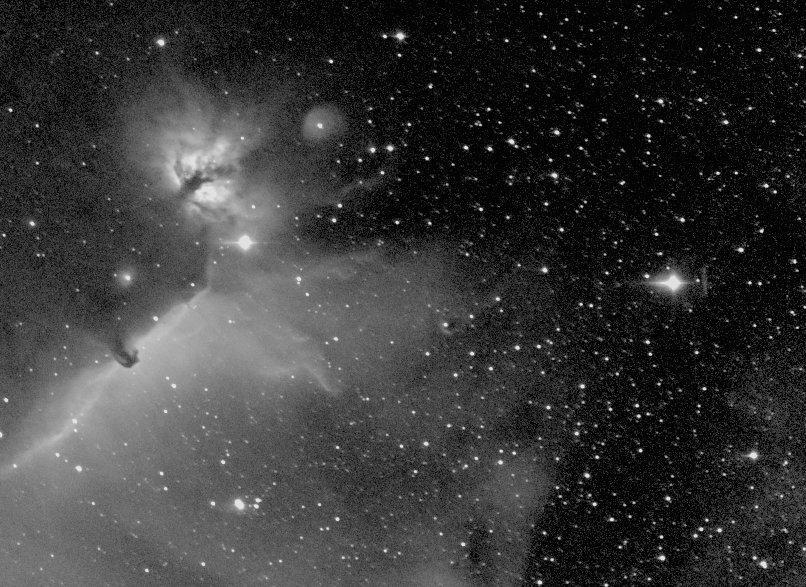
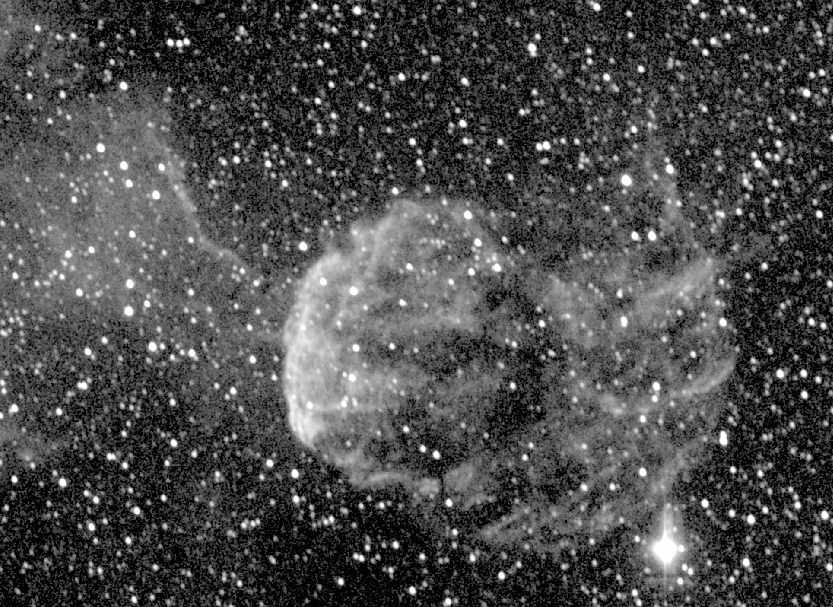
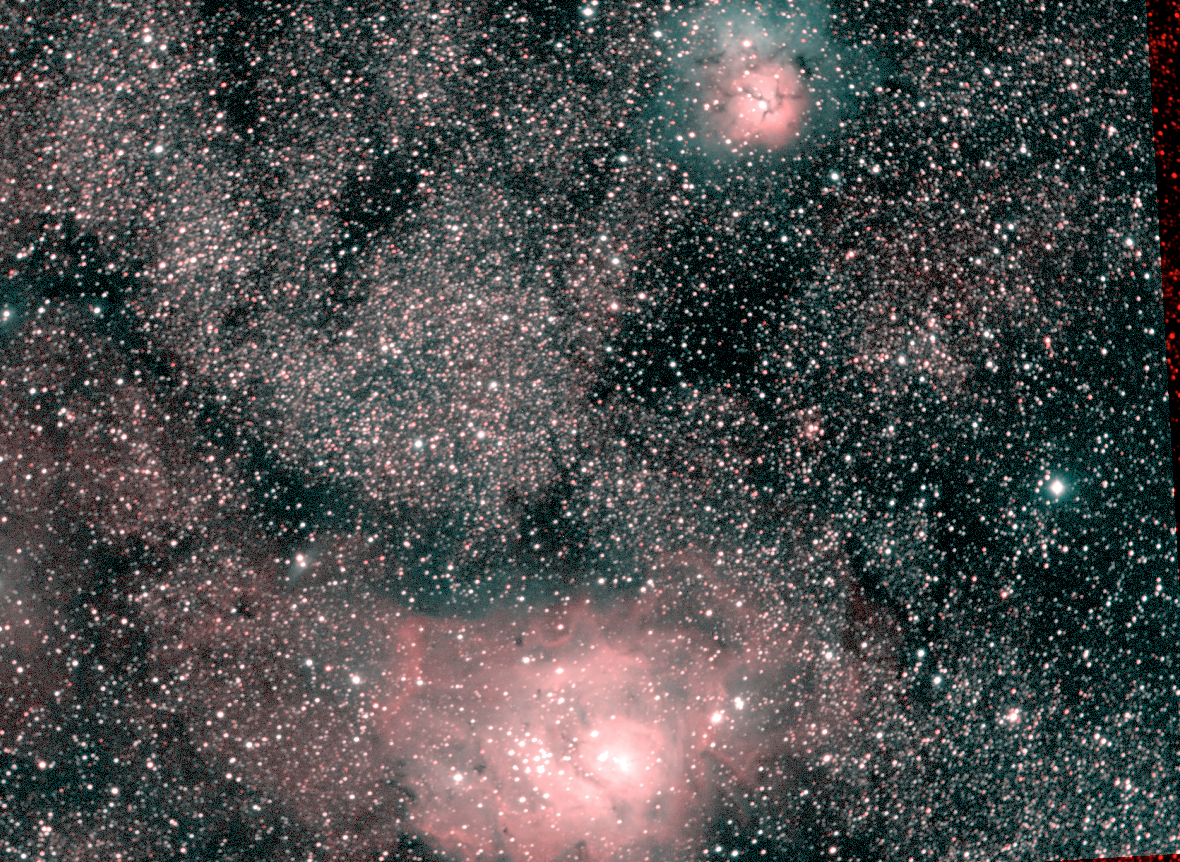
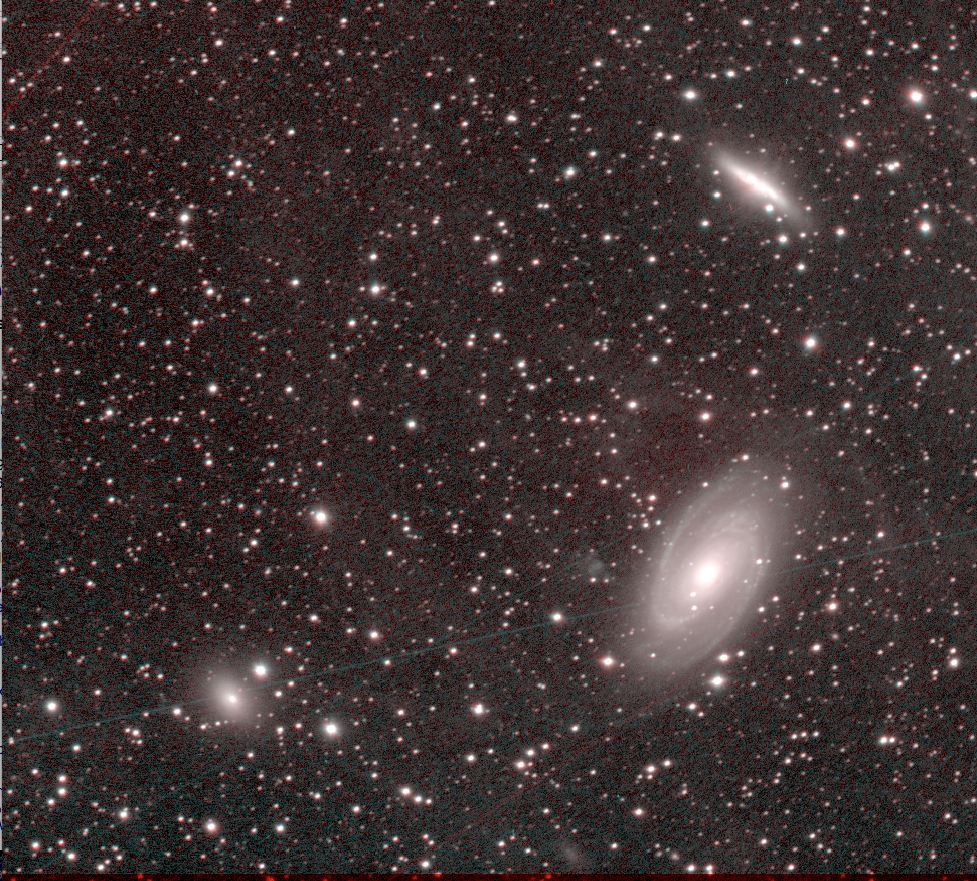
During 2017, UA astronomers have been commissioning a wide-field, very sensitive imaging system based on a low-reflection Canon lens, which we call Crimson Dragon (the beautiful deep red finish on the mounting just happened to come that way). With narrow filters to isolate Hα emission from nebulae, it works well even from our light-polluted campus, and the performance when taken to dark-sky sites is spectacular. These images showcase the Horsehead Nebula in Orion and supernova remnant IC 443 in Gemini (both from campus), and a field including the Lagoon and Trifid Nebulae in Sagittarius plus galaxies in the M81 group in Ursa Major (both observed from Kitt Peak, Arizona).
|
|
|
|
For the lunar eclipse on the evening of September 27, 2015, the overcast unexpectedly broke up well enough to show most of the eclipse to a large group of visitors. This view, with the 125mm guide telescope, shows the color at totality.
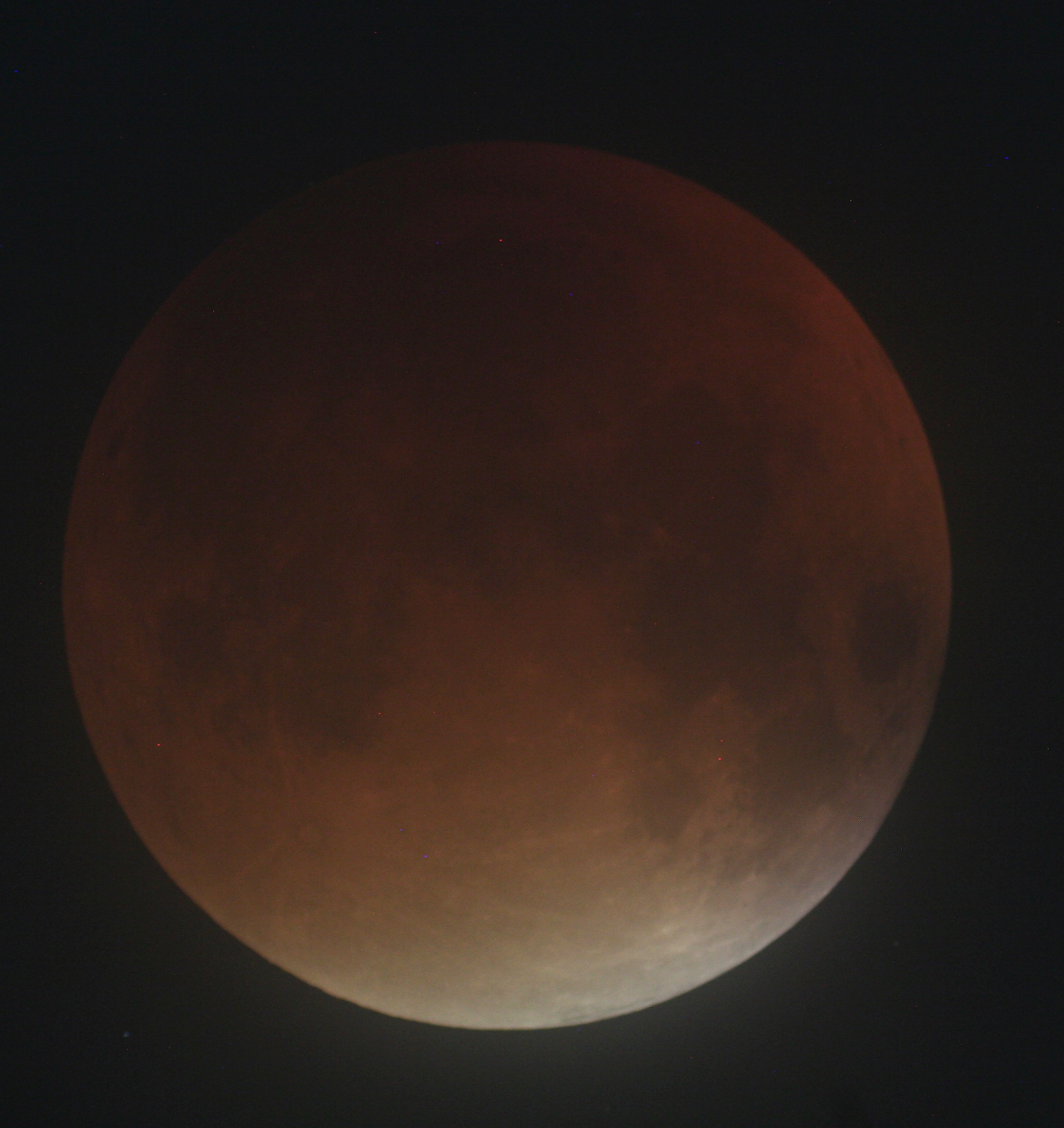
At the same time, we were able to display live images from the 1-meter telescope of the SARA consortium in Arizona. The samples show part of the fully eclipsed Moon, and a view just after totality ended.
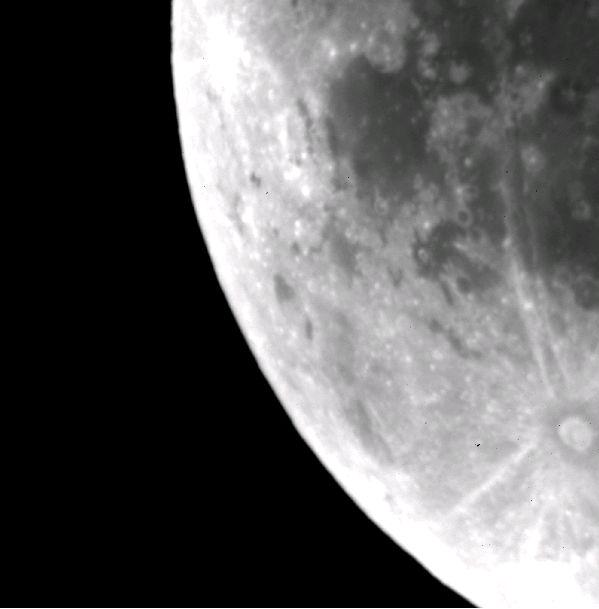 |
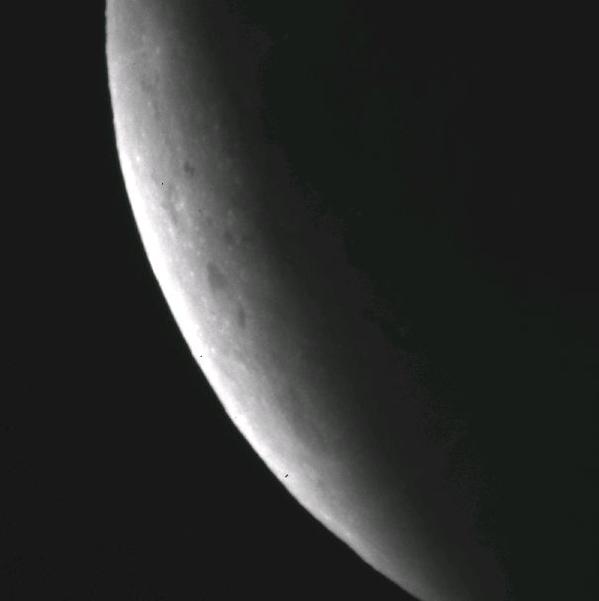 |
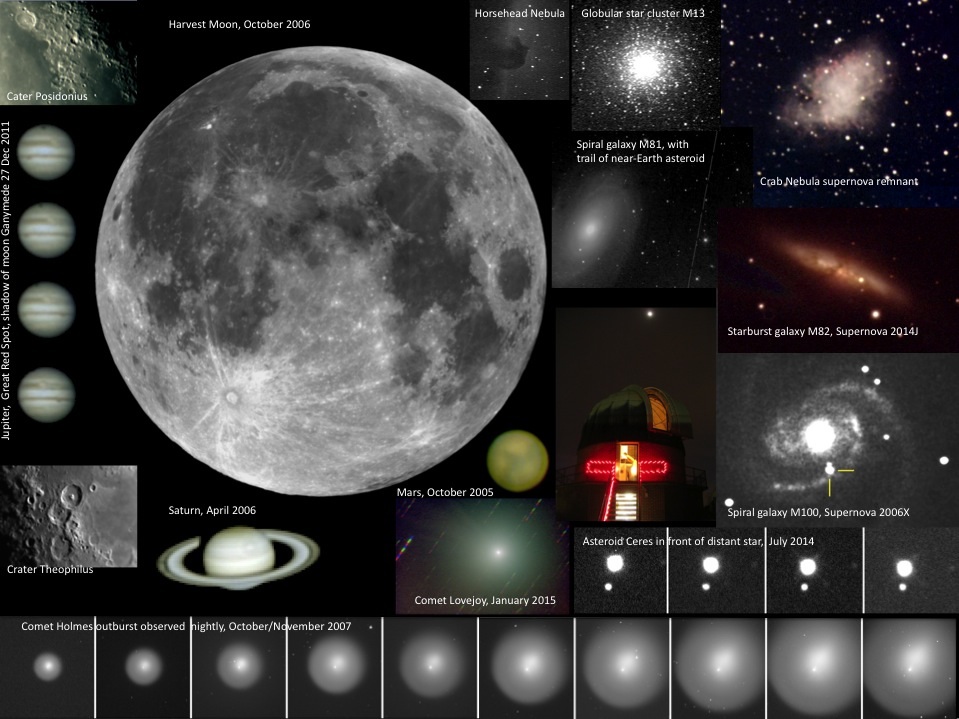
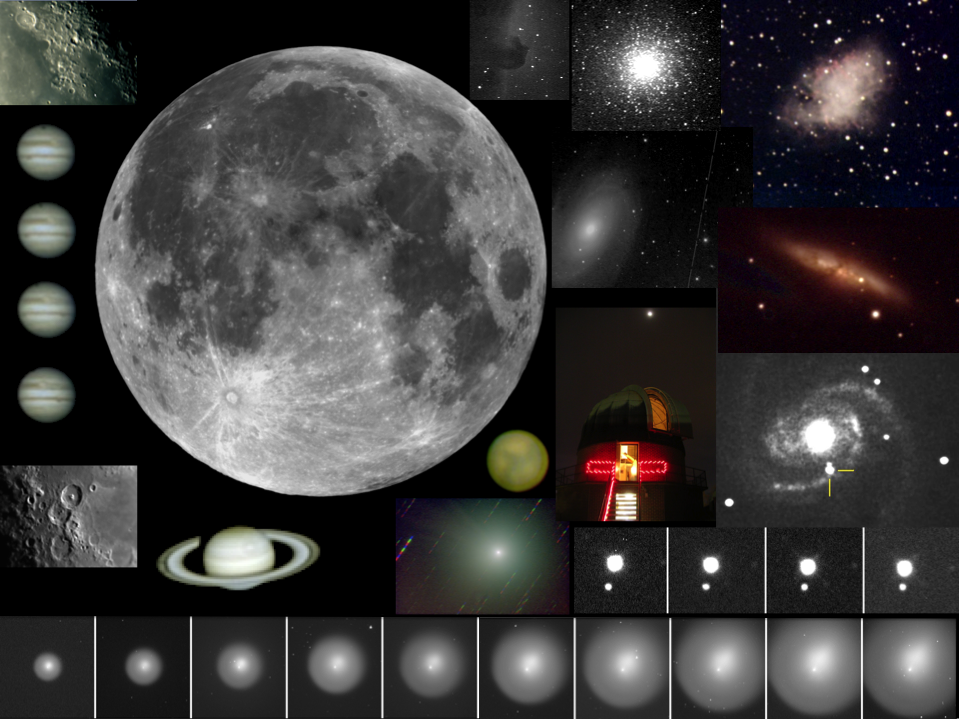
January 2014 marks 10 years of operation of the University's 0.4m DFM telescope atop Gallalee Hall. To commemorate this milestone, here is a montage of some images it's been used for over the years (and to see what all these things are, here is a version with labels). Despe its modest size, and urban setting, the instrument is well equipped, and has contributed to published reseach on quasar variations and the sizes and shapes of asteroids.
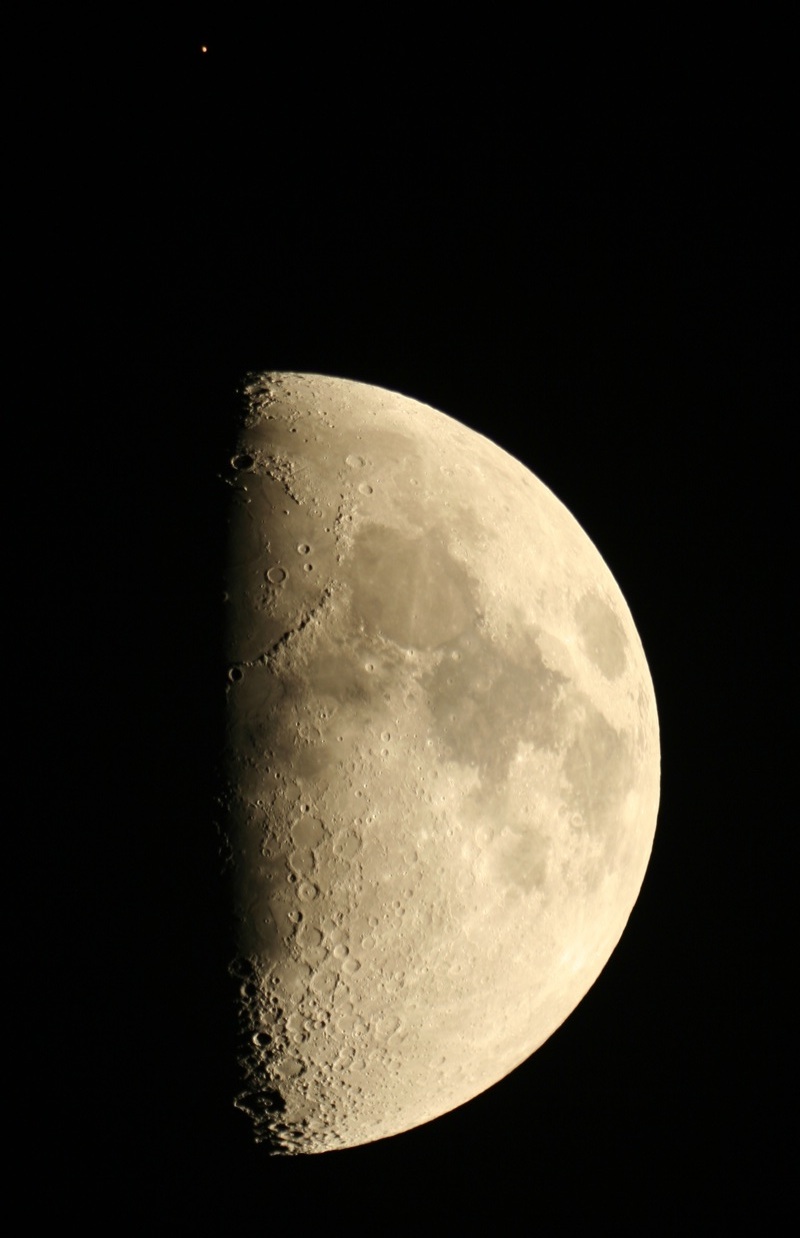
This view captures the close conjunction of the Moon and Mars on the evening of July 5, 2014. Taken using a Canon Digtal SLR on the 125mm guide telescope of the UA observatory, it shows the vast distance range even within our solar system. A close view will show the gibbous phase of Mars, most pronounced when we see it 90 degrees from the Sun.
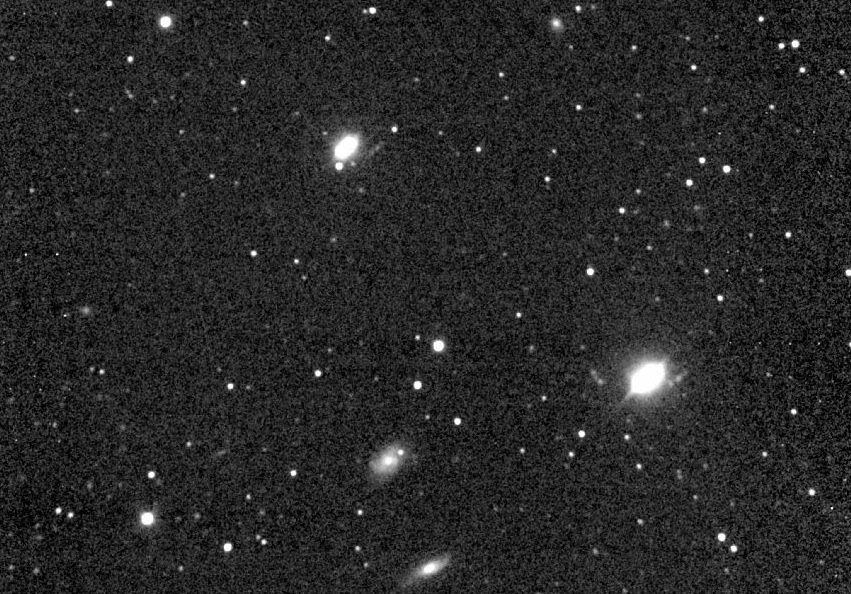
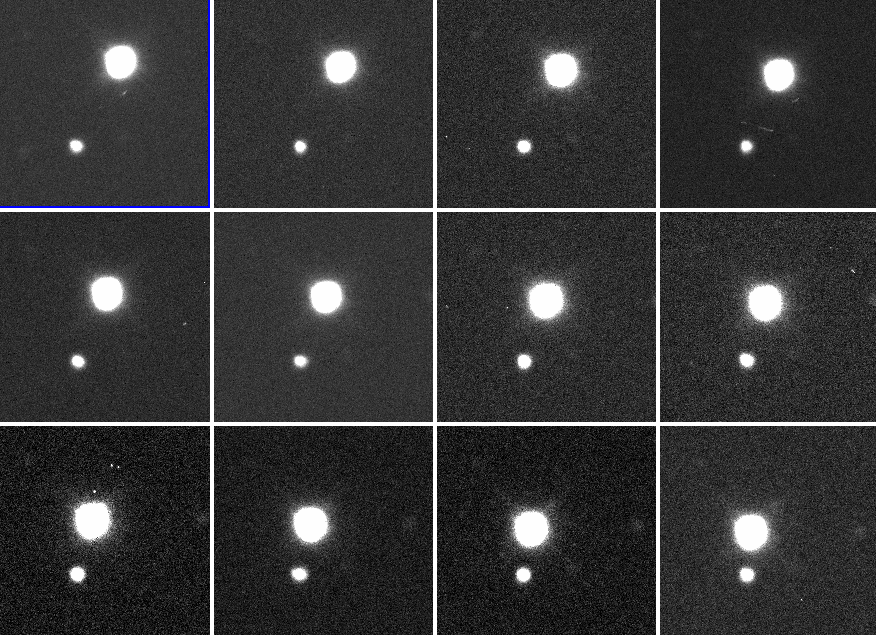
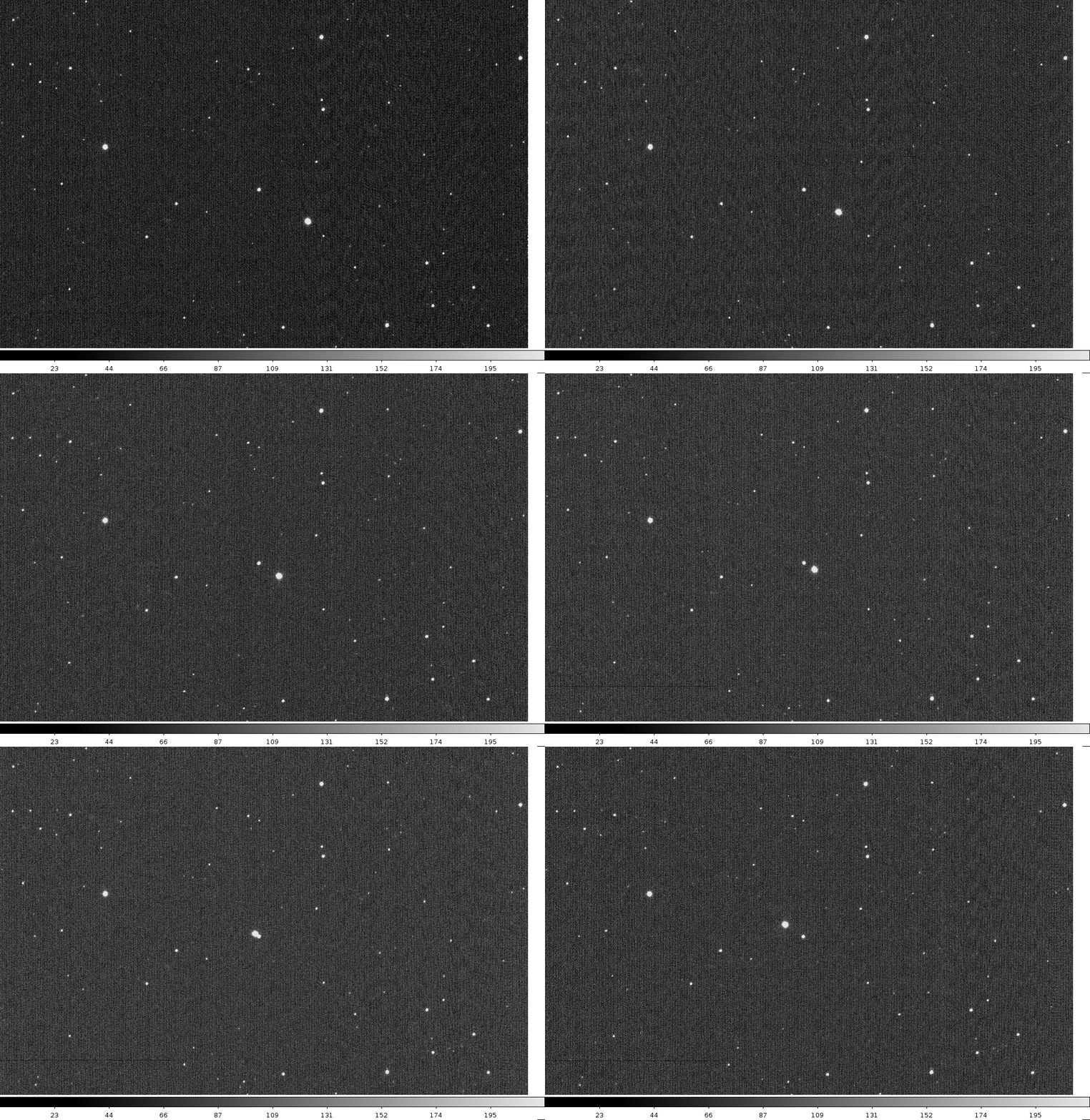
July 2014 saw a close alignment among Earth and two of the largest asteroids, Ceres and Vesta. On July 3, the UA 0.4m telescope was used for a series of CCD images combined into this version. Vesta is the brighter one to the right, while larger, darker, and more distant Ceres is near the top. In the background at the bottom is the galaxy pair NGC 5183/4, with still more distant galaxies visible. The asteroids' motion relative to Earth makes them appear as trails during the 75-minute time span of these observations. Both asteroids are targets of NASA's Dawn space probe, which is en route to Ceres after orbital mapping of Vesta (the invisible probe would be off this frame to the right). The lower montage shows Ceres and a background star from the individual 5-minute exposures, so its relative motion is clear.
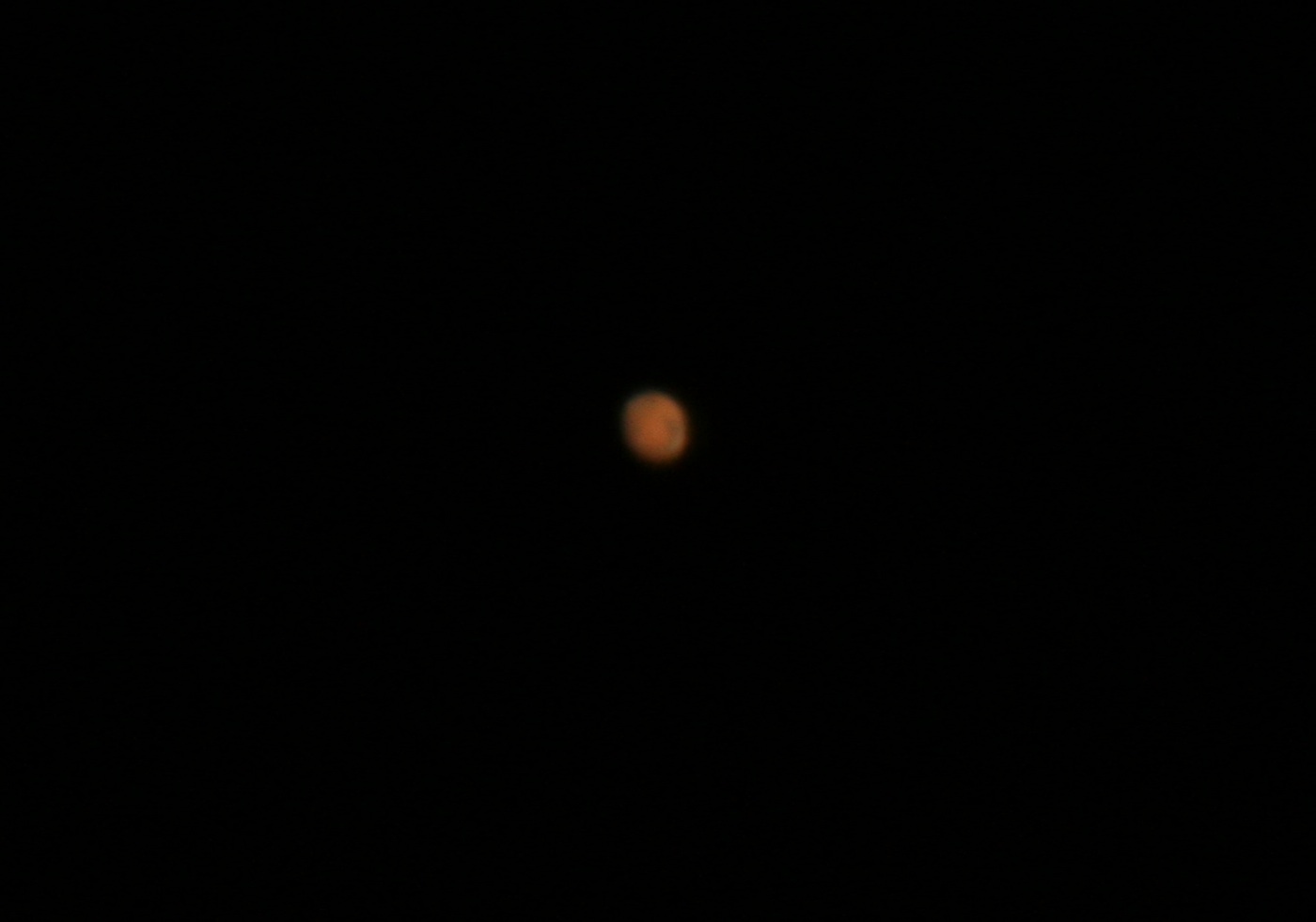
We often get our steadiest images on hot, humid summer nights in this part of the country. These are single-shot images from the UA 0.4m telescope in June 2014. The prominent dark area on Mars is perhaps its most famous spot, Syrtis Major, with the north polar cap at upper left.
 |
 |
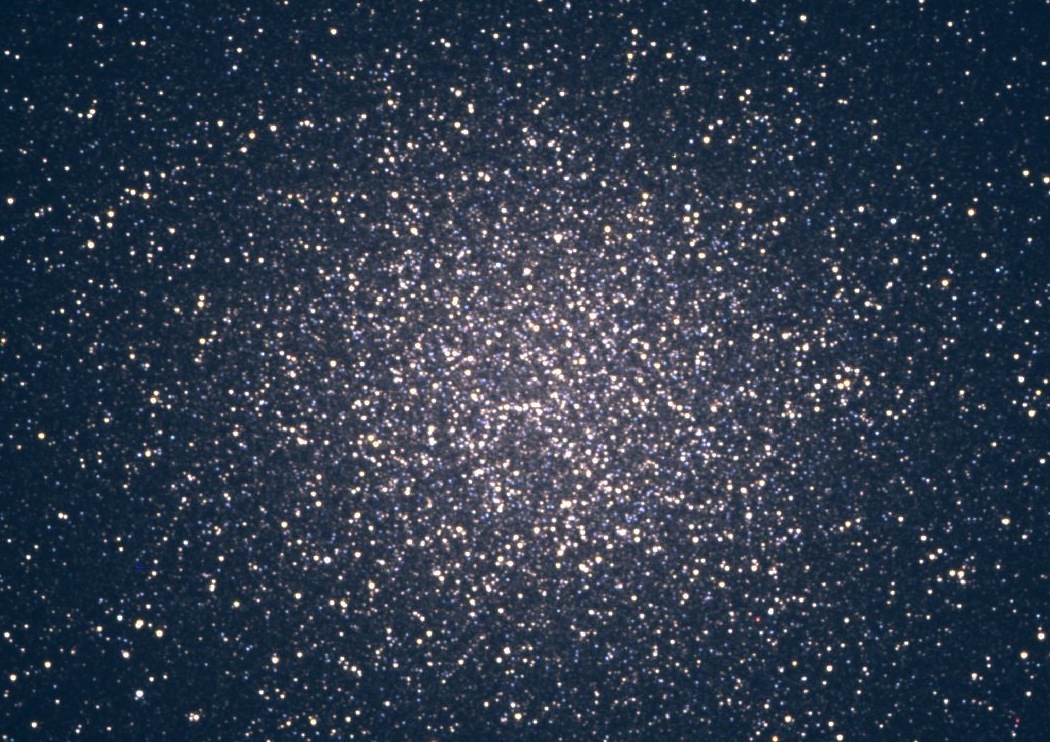
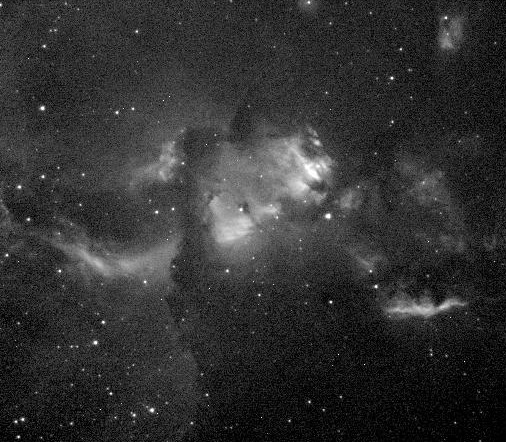
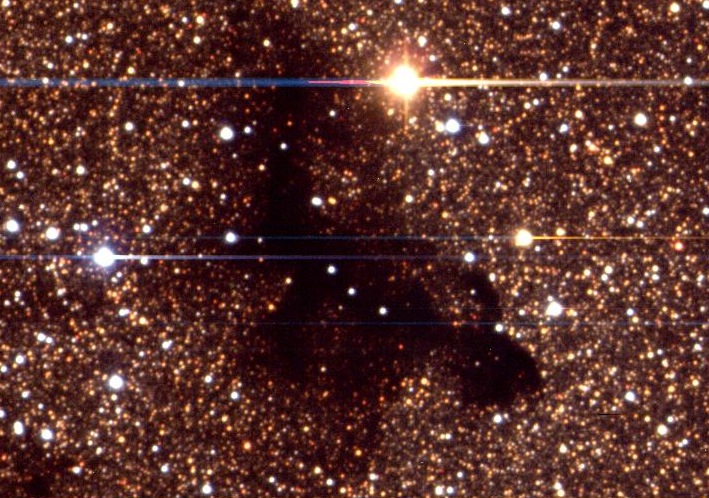
The Astronomy 101 class in Summer 2013 had a demo night, watching data taken with the 0.6m SARA telescope in Chile come in "live". Here are some samples related to recent lectures in the class: the globular cluster ω Centauri, emission nebula NGC 3582, and dark cloud Barnard 86 (the "Ink Spot") seen toward the central bulge of the Milky Way.
 |
 |
 |
| ω Cen | NGC 3582 | Barnard 86 |
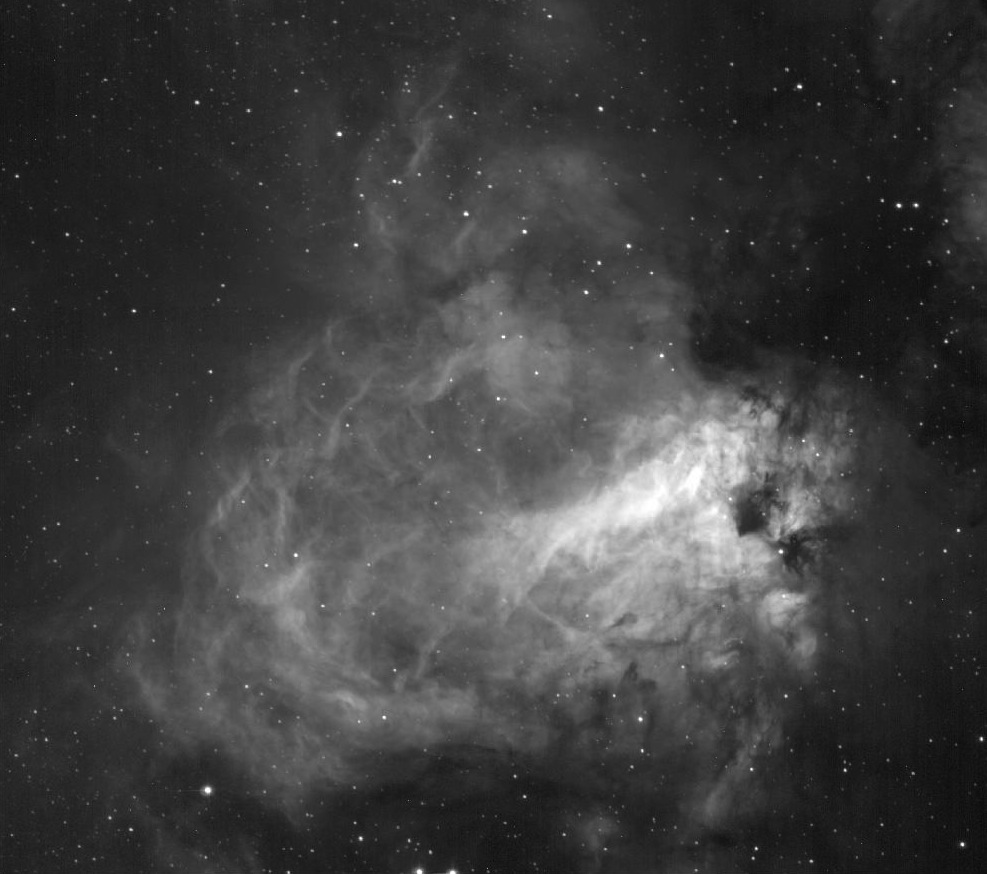
This mosaic of the star-forming region and emission nebula M17 (also known as the Omega or Swan Nebula) covers a region 0.7 degrees on a side, put together from 9 5-minute exposures with an Hα filter at the 1m SARA telescope on Kitt Peak. This was done during tests on its guiding and tracking - had to point at something.
Asteroids passing in the night - this time it was 1998 QE2 passing about 15 times the Moon's distance from us. This animation combines 15 1-second exposures over a 9-minute period early on June 1, 2013, from the SARA-N 1m telescope at Kitt Peak.
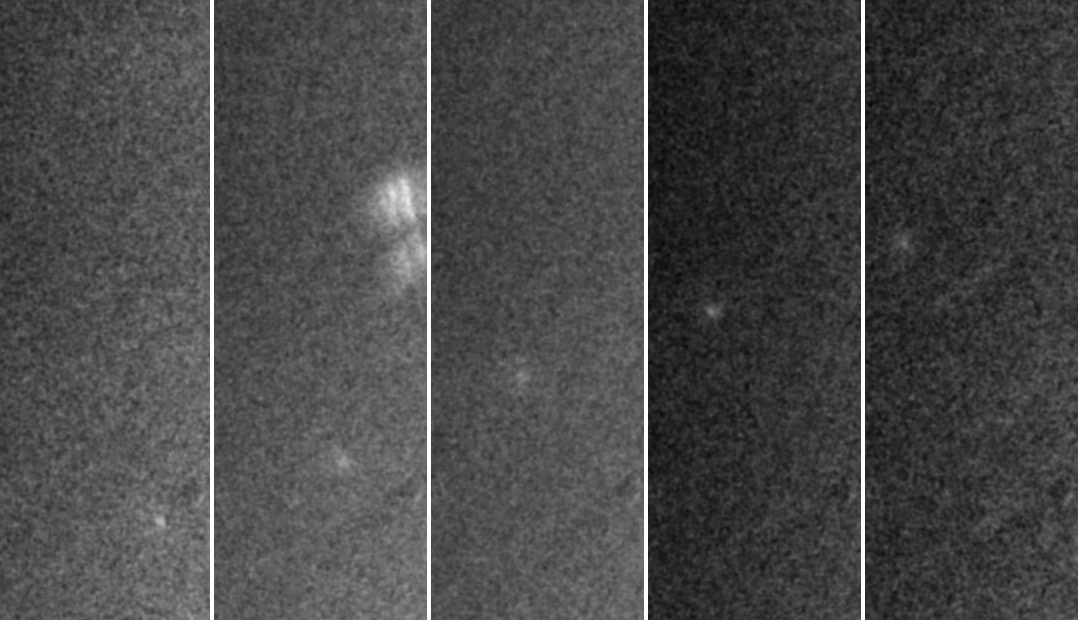
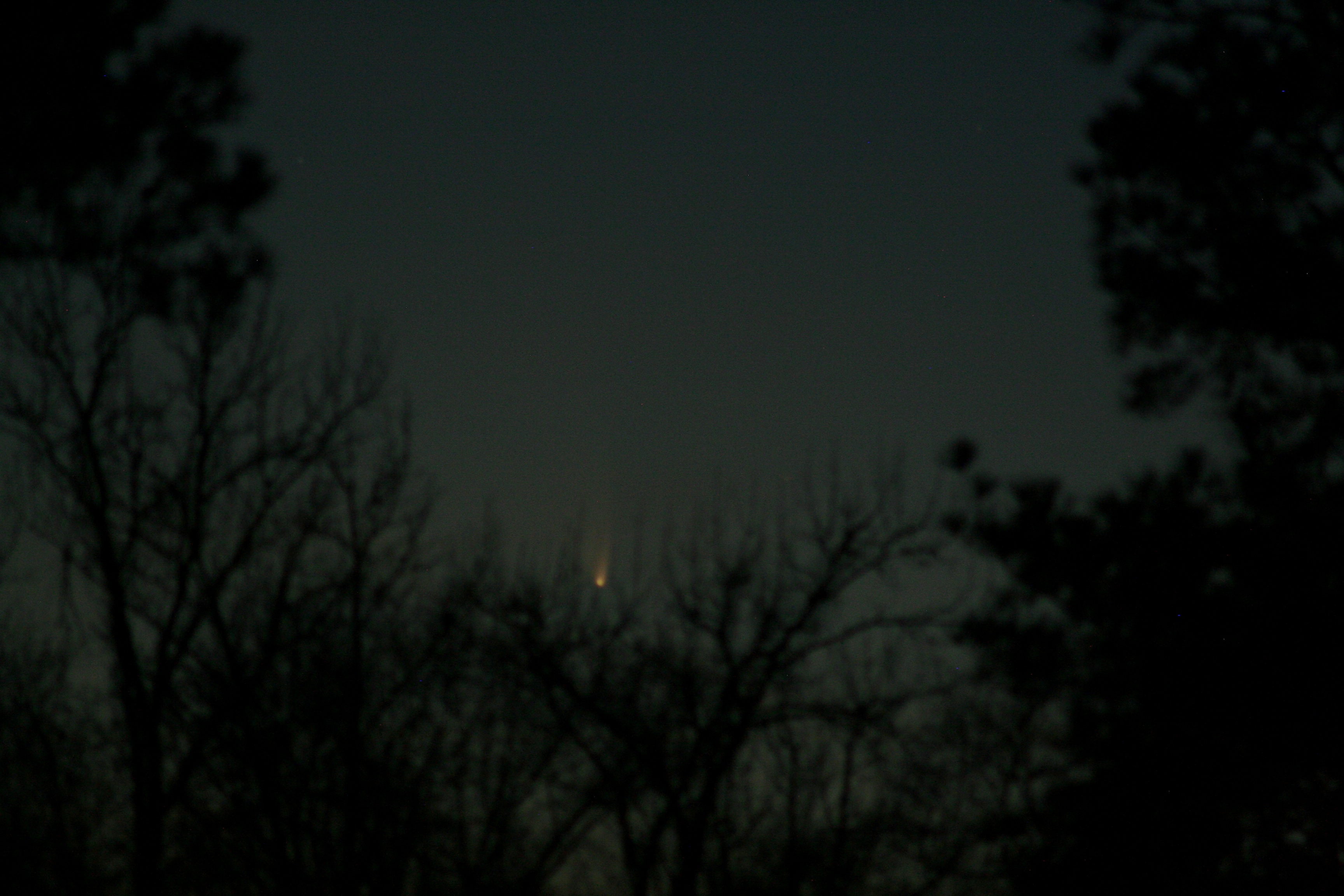
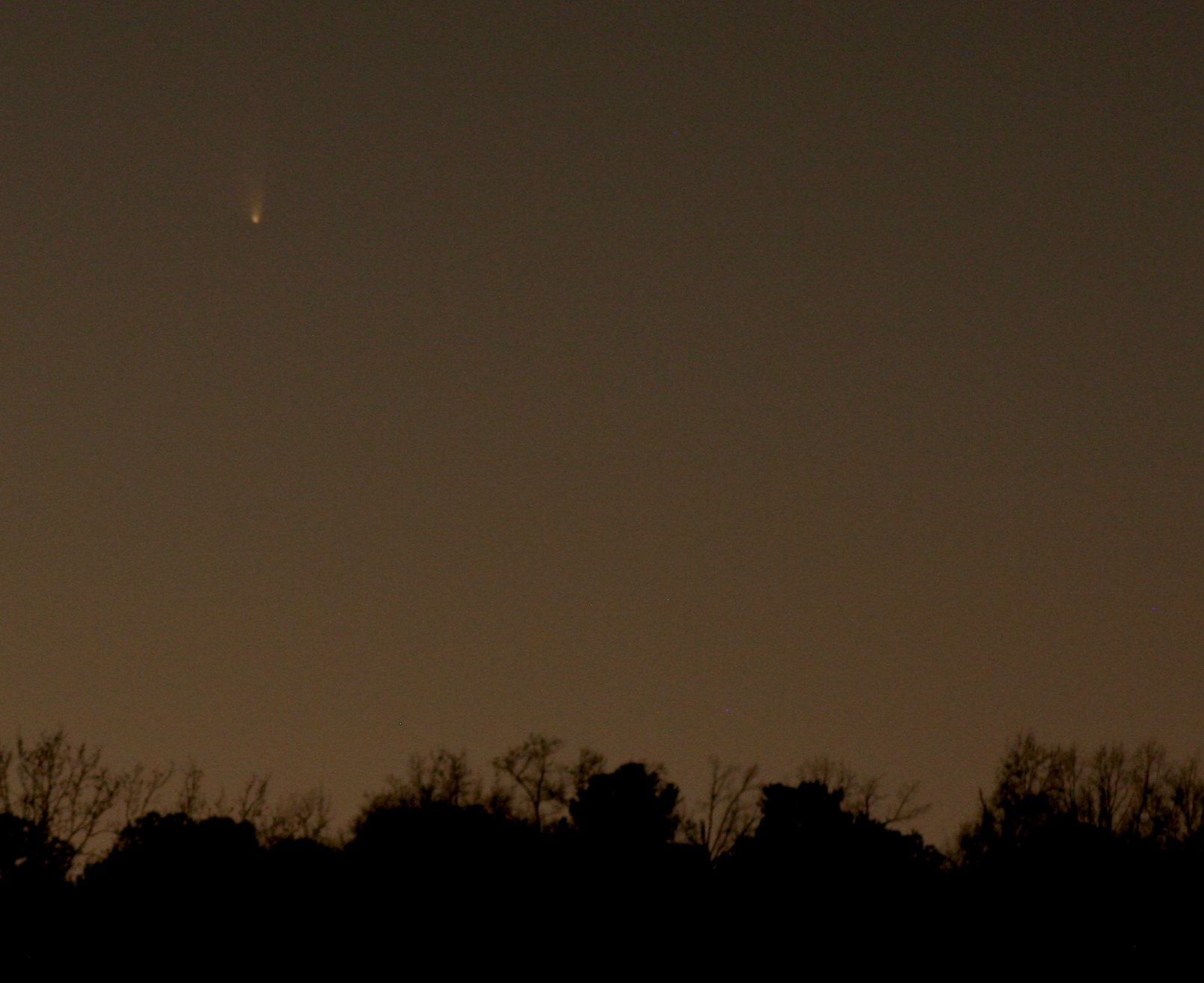
We haven't been able to get to it from the campus observatory once it gets dark (elevation plus trees), but here are a few views of comet PANSTARRS (C/2011 L4 for those keeping count). First is a montage of five images taken near midday on March 7, 2013, using the CCD camera on our 0.4m telescope and a near-IR filter. We knew we had it when there was an object at the right place and moving in the right speed and direction. The images don't show more than the innermost part of the comet's head, but for the impatient it got us started.
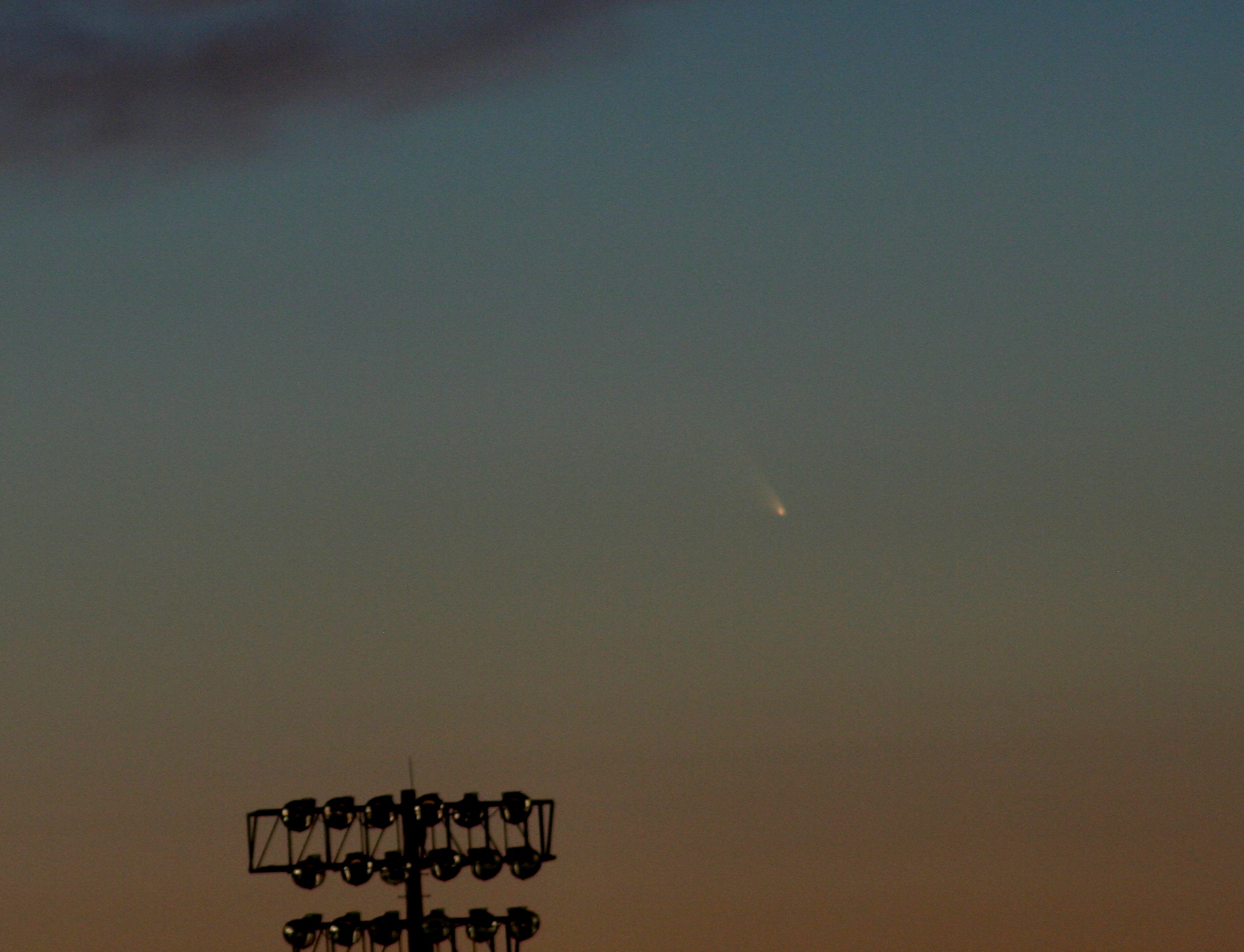
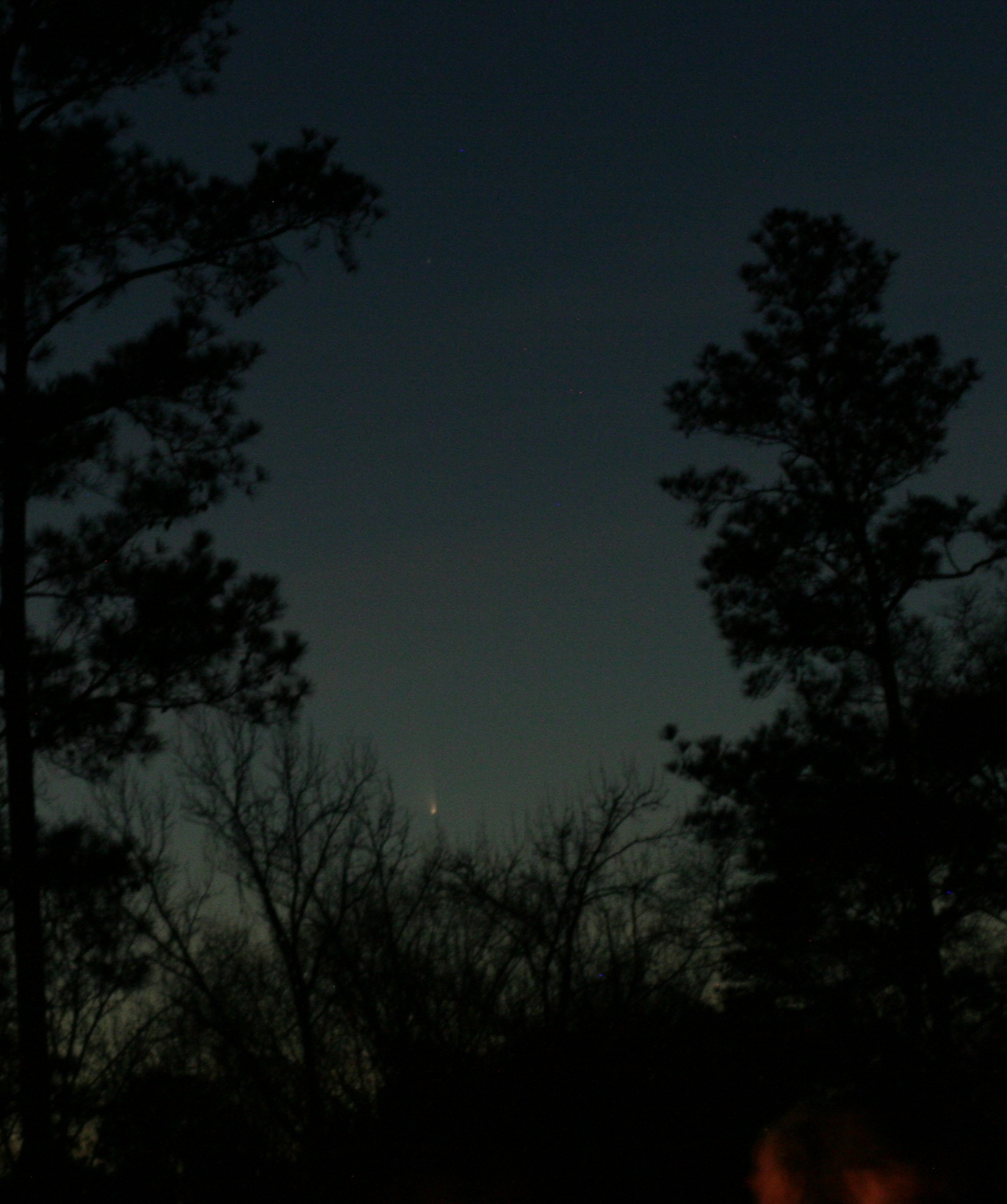
These images used a tripod-mounted camera with zoom lens, showing the comet on three evenings as it slowly rose out of the Sun's glare. The images on March 15, 2013 were taken during our public event at Moundville, and capture how low the comet was as we were able to show it to (some of our) visitors.
 |
 |
 |
 |
| 11 March | 15 March | 15 March | 16 March |
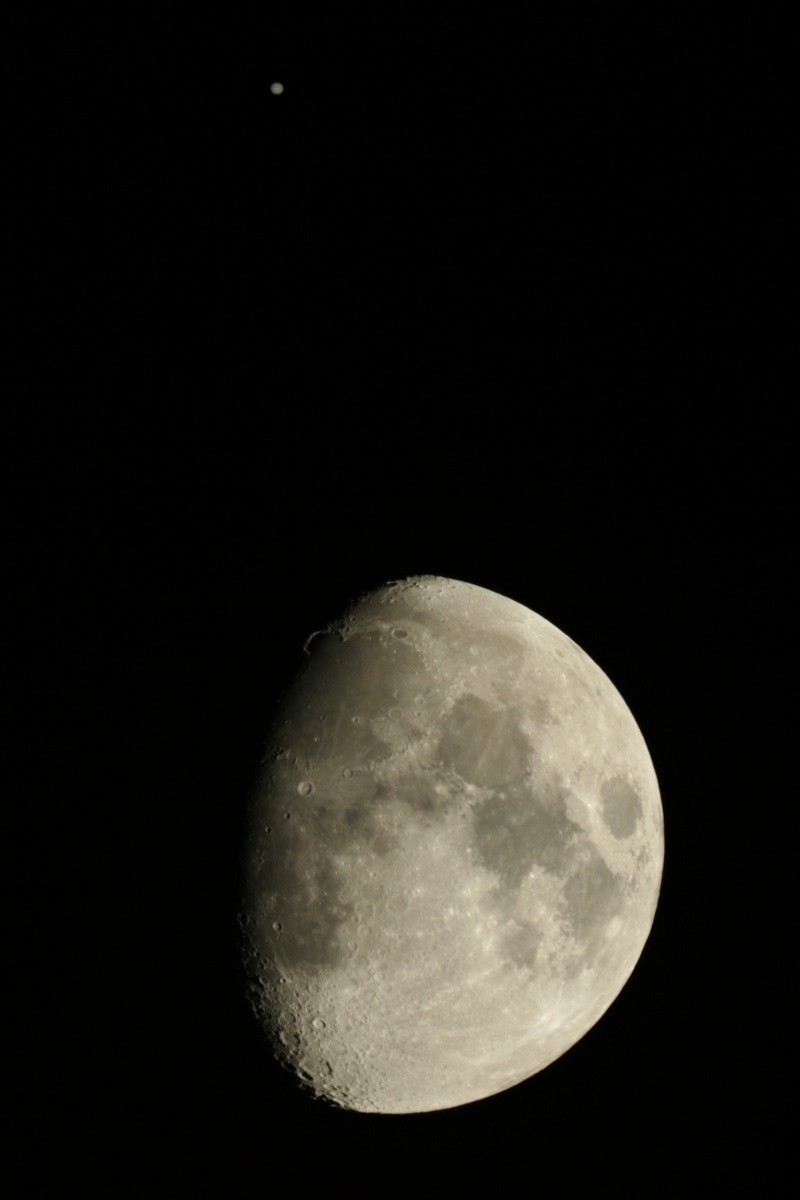
This view captures the Moon and Jupiter nearly aligned in our skies on the evening of January 21, 2013. Taken using a Canon Digtal SLR on the 125mm guide telescope of the UA observatory, it shows the vast distance range even within our solar system. Close inspection will show some of Jupiter's cloud belts.
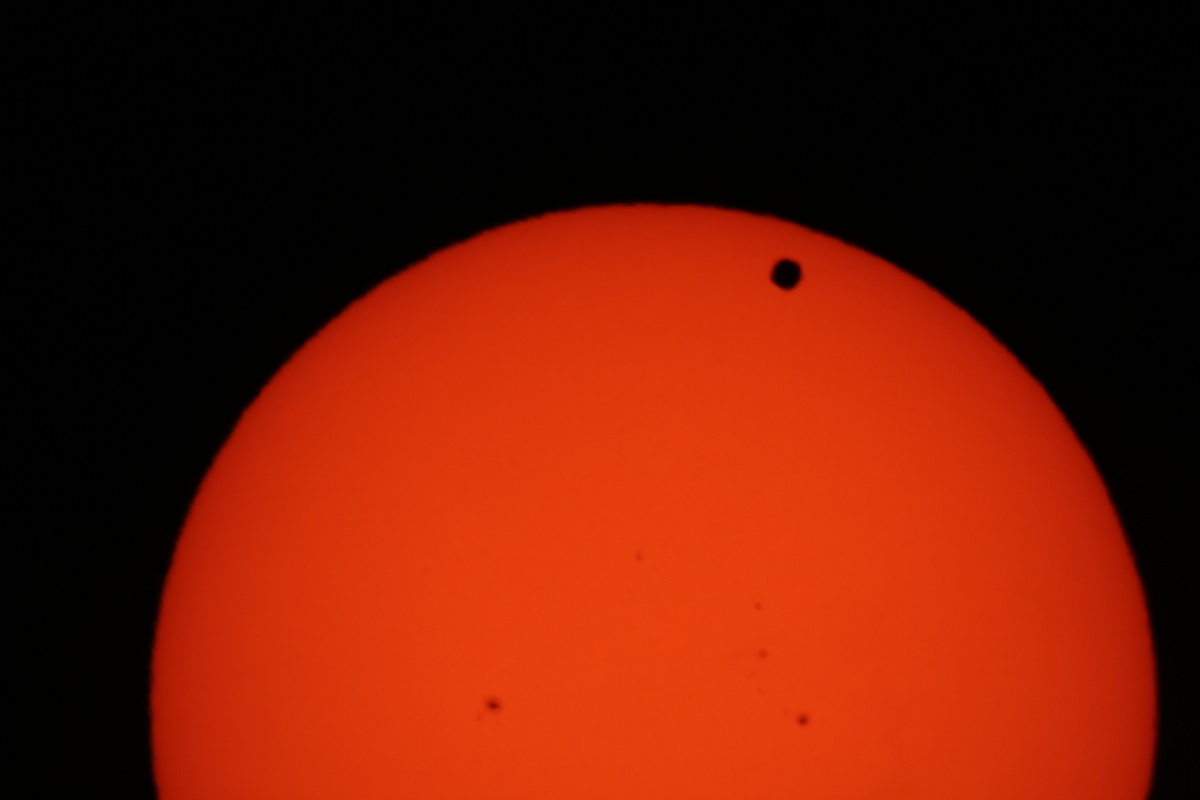
Over a hundred viewers waited out passing clouds for a glimpse of the transit of Venus on 5 June 2012. Most got to see the black dot crossing the Sun. This snapshot used a Canon Digital Rebel on a Celestron 8 telescope with Thousand Oaks solar filter.
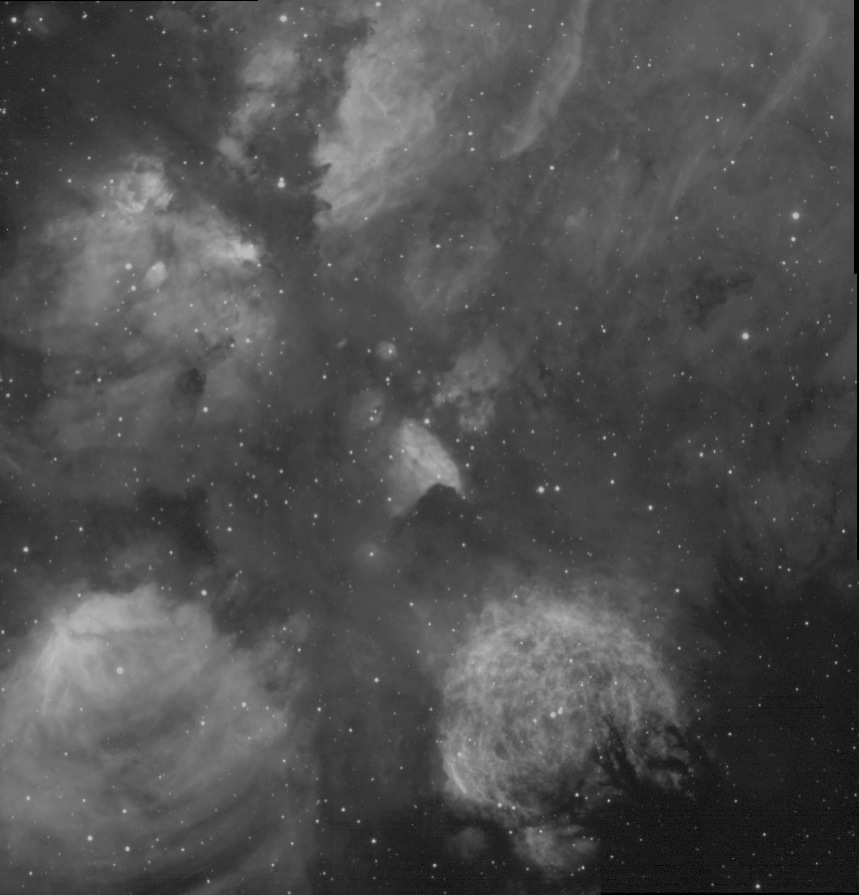
Something for all nebular tastes - the star-forming region known as the Cat's Paw (NGC 6334 and environs) in Scorpius. This is a mosaic of 9 frames taken with the SARA-S telescope in Chile, using a narrowband filter to emphasize the red Hα emission of ionized hydrogen. The central gas patch looks like a Star Fleet insignia from the Star Trek universe. To its lower right is a bubble blown by the wind of a massive star, while other parts of the nebula share features with the Lagoon Nebula and the famous pillars of the Eagle Nebula.
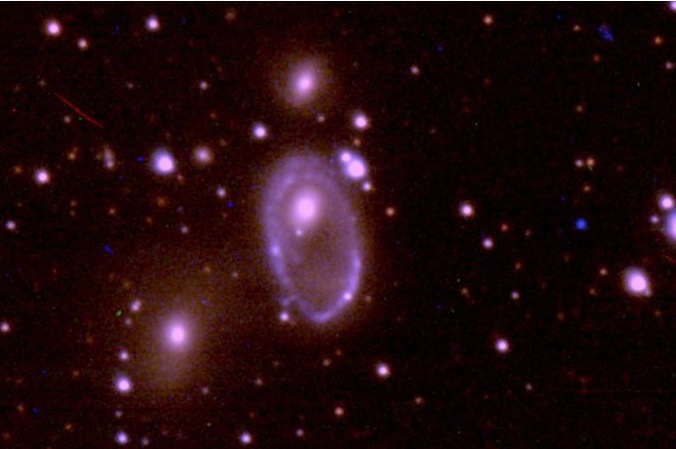
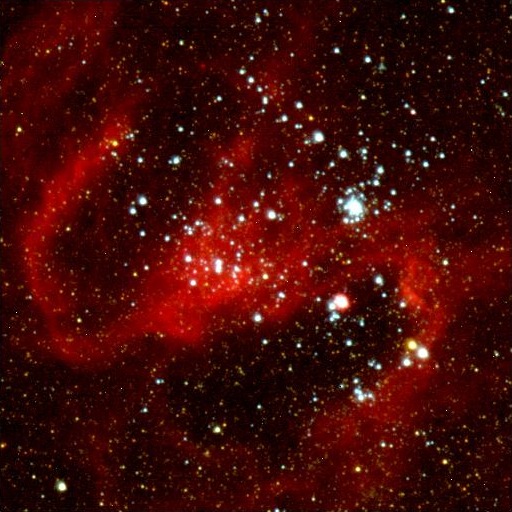
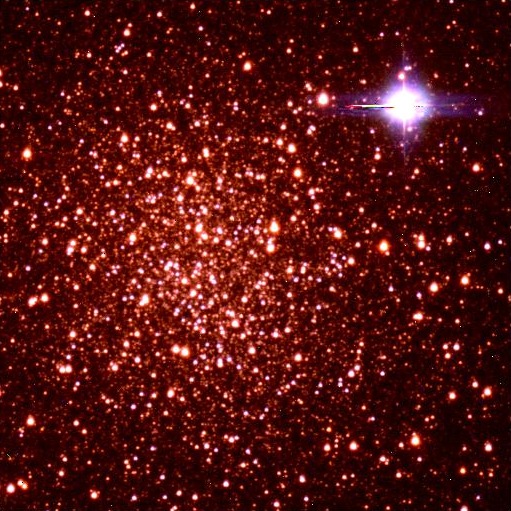
On the night of March 10/11, 2011, students in the AY433/533 class on Astronomical Techniques operated the SARA telescopes in both hemipsheres at once. These are some of the southern targets, imaged with the telescope in Chile. First, the collisional ring galaxy ESO 34-IG11, with the blue ring showing the color of young star-forming regions trigered as the gas in the galaxy compressed into an expanding ring after a neighboring galaxy passed almost "vertically" through its disk. Closer to home, the star-forming region N119 in the Large Magellanic Cloud, 160,000 light-years away, shows a vast spray of glowing hydrogen lit up by the ultraviolet light of embedded stars. Finally, the globular star cluster NGC 4372 is in our own galaxy, but lies behind absorbing dust in the plane of the Milky Way giving it an unusually red color.
 |
 |
 |
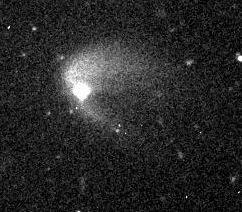 This view from 13 December 2010 shows dust around the
asterioid 596 Scheila, less than 48 hours after the cloud's initial detection.
At that time it was not yet clear whether this included gas breaking
free of the asteroid (which would make it one of the hybrid "main-belt comets", or
debris blasted from its surface by collision with a smaller unseen asteroid.
This 10-minute V-band exposure was taken by Erin Darnell and Bill Keel
with the 1m SARA remote telescope in Arizona.
This view from 13 December 2010 shows dust around the
asterioid 596 Scheila, less than 48 hours after the cloud's initial detection.
At that time it was not yet clear whether this included gas breaking
free of the asteroid (which would make it one of the hybrid "main-belt comets", or
debris blasted from its surface by collision with a smaller unseen asteroid.
This 10-minute V-band exposure was taken by Erin Darnell and Bill Keel
with the 1m SARA remote telescope in Arizona.
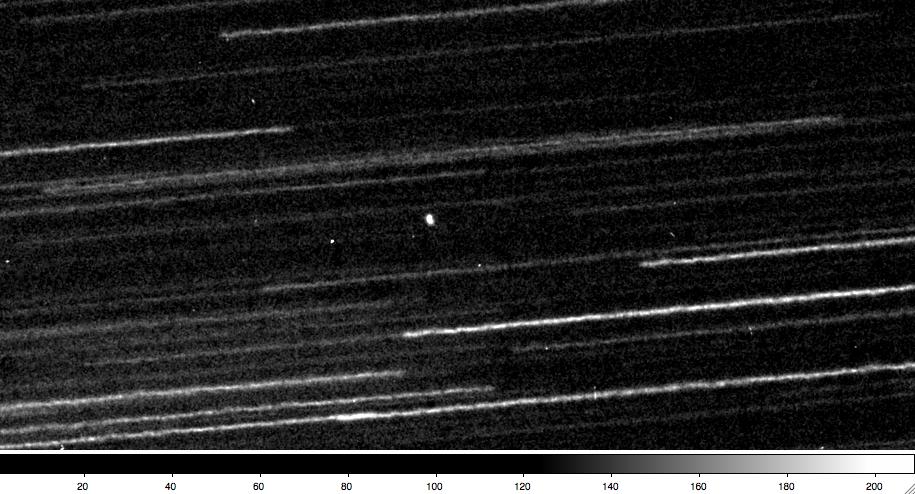
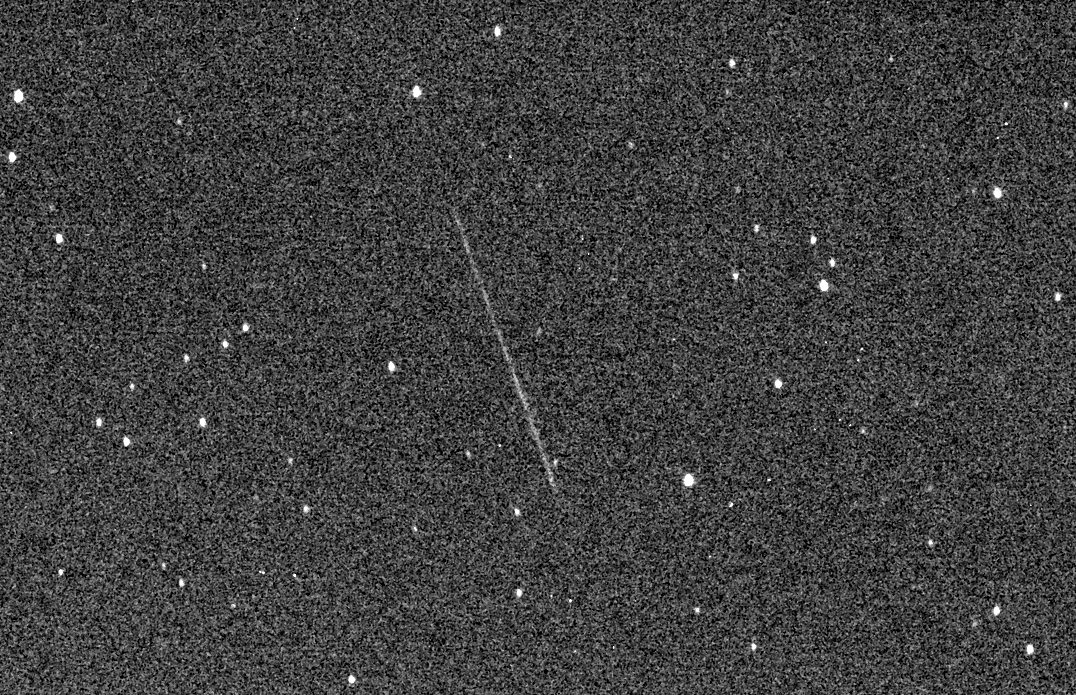
On the evening of 12/13 January 2010, the recently discovered asteroid 2010 AL30 made a close pass to Earth, within about 1/3 ofthe Moon's distance. Here's a shot from the UA 16-inch telescope, tracking on the 30-yard chunk of rock for four minutes as the background stars streaked through the field of view.
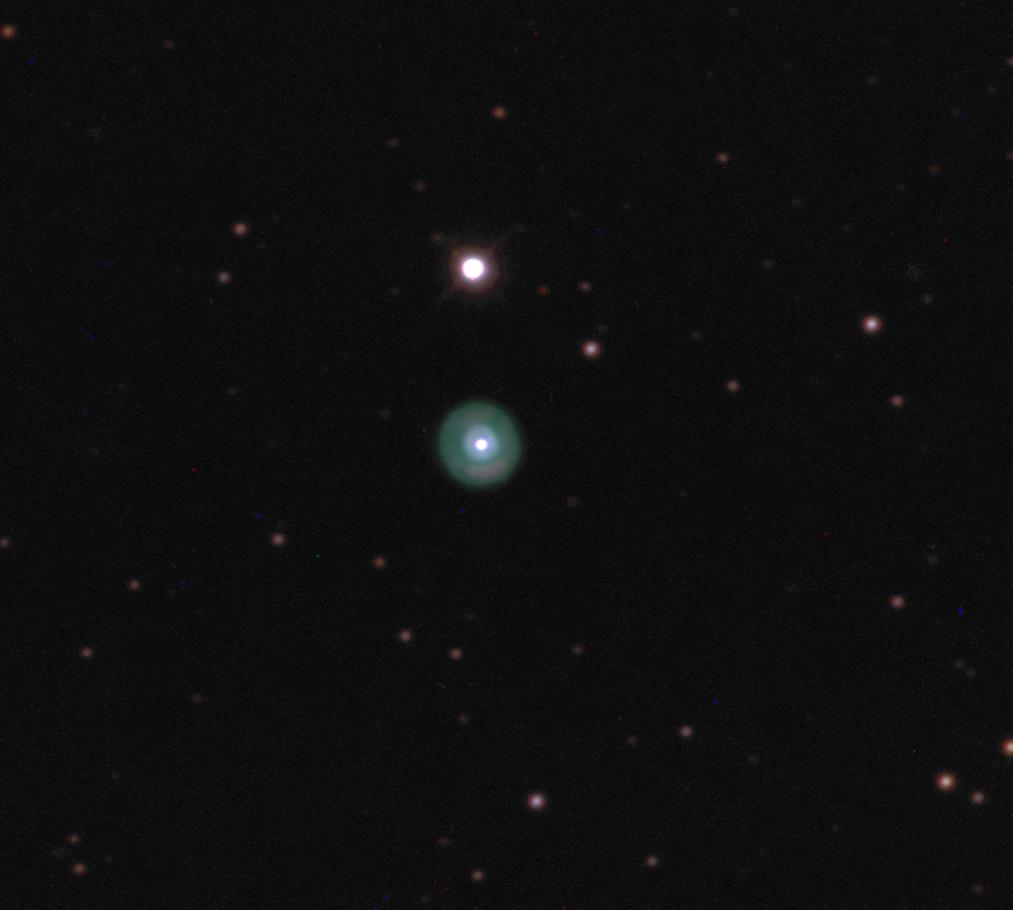
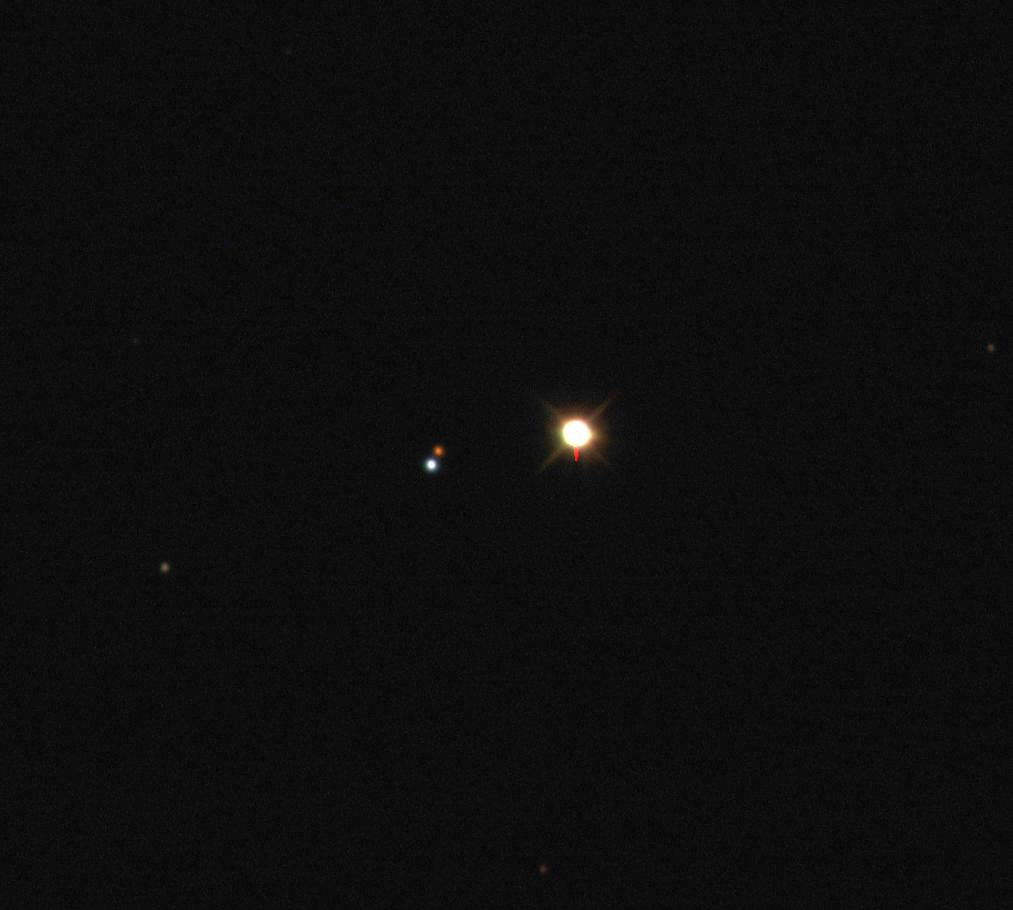
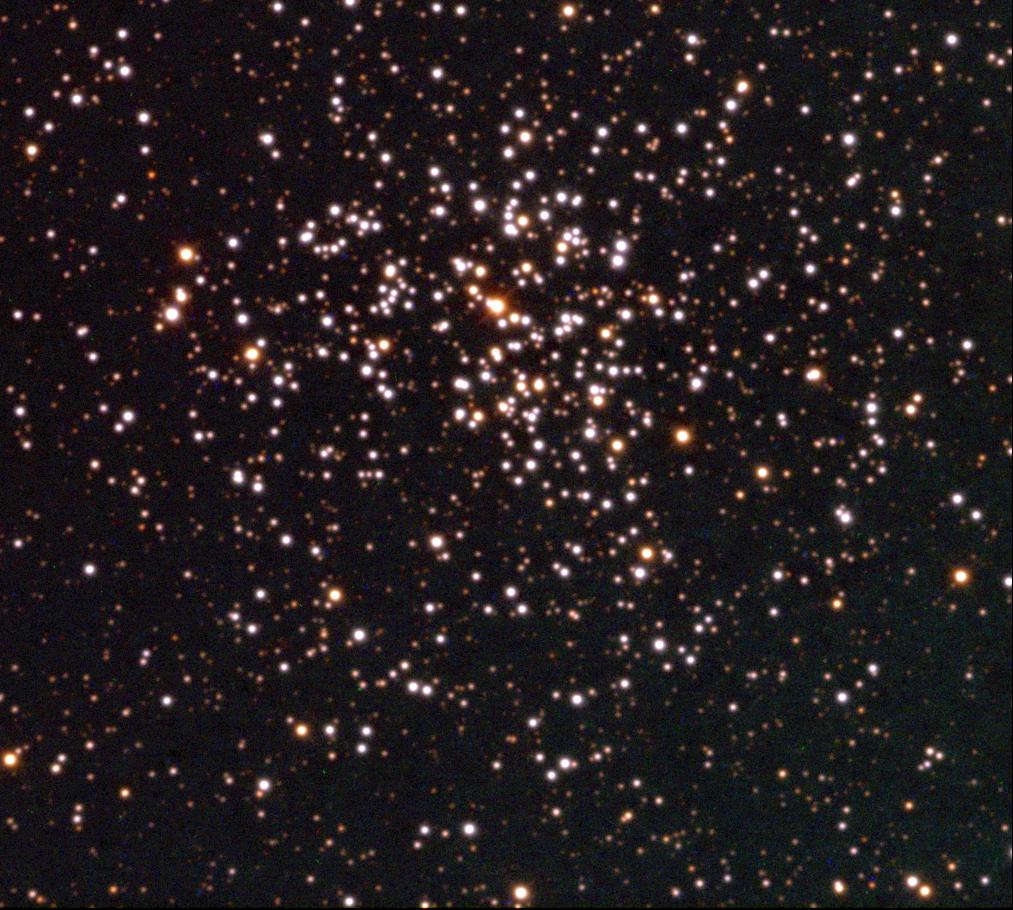
Here are some colorful holiday snapshots from December 2009, to ring in the new year. From the UA 16-inch campus telescope, we present the planetary nebula NGC 2392 (the Eskimo nebula) in Gemini, the close pair of red dwarf/white dwarf stars 40 Eridani BC, and the star cluster Messier 37 (with its bright red-giant members).
 |
 |
 |
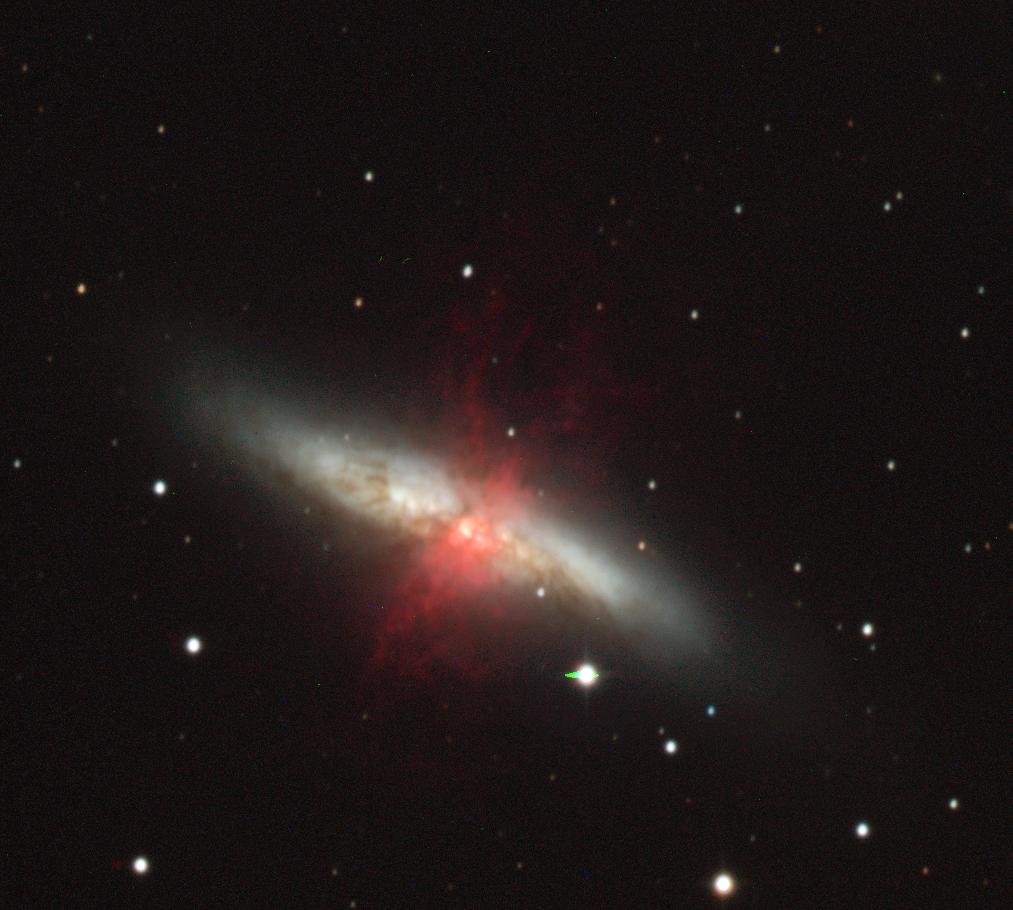
Also from December 2009, from a set of checkout images with the SARA 1-meter telescope, here is the starburst galaxy Messier 82, with the red filter emphasizing gas being blown out of the galaxy by the combined energy of many supernova explosions:
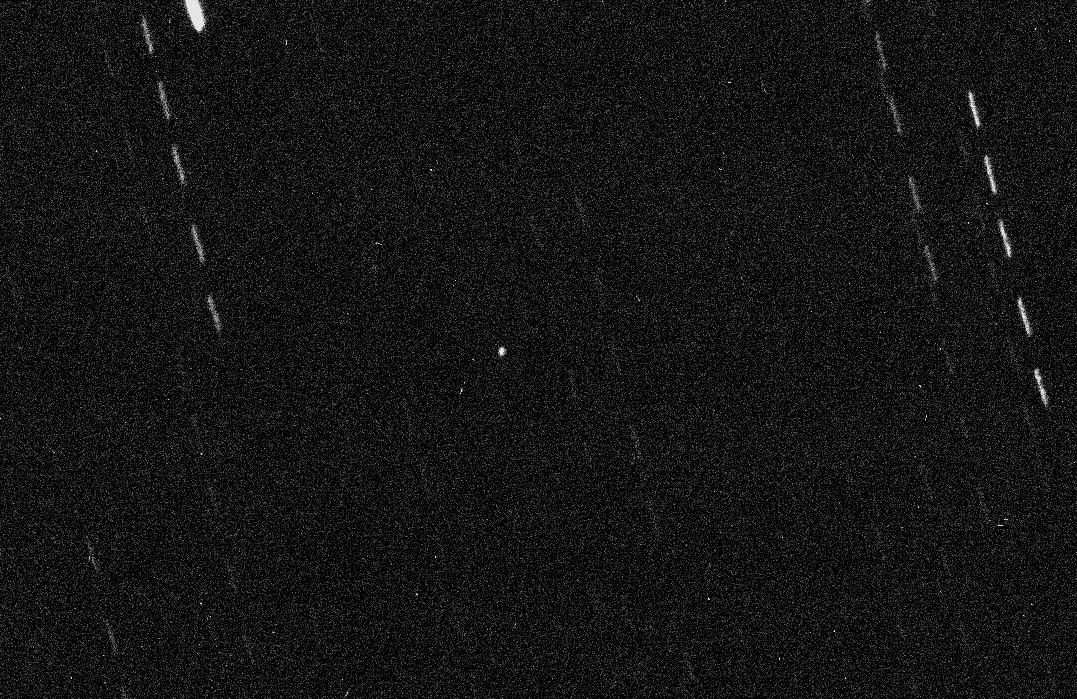
The Earth-approaching asteroid 2007 TU24, imaged using the UA 16-inch telescope on the evening of 27 January 2007. This is the sum of 10 one-minute exposures, with the telescope tracking on the asteroid. Background stars thus appear as dashed trails, with gaps between the individual exposures. At this point it was slightly more than three times the Moon's distance, closing to within 1.4 times the lunar range about 30 hours later. The area shown here is 0.25 degree across (half the apparent size of the full Moon). Just ahead of clouds, we got some images the following night, about 6 hours before closest approach. This image shows the asteroid's trail over a 2-minute period while tracking the stars, near 0110 UT on 29 January 2008.The motion was reaching 3 arcseconds per second at this point.
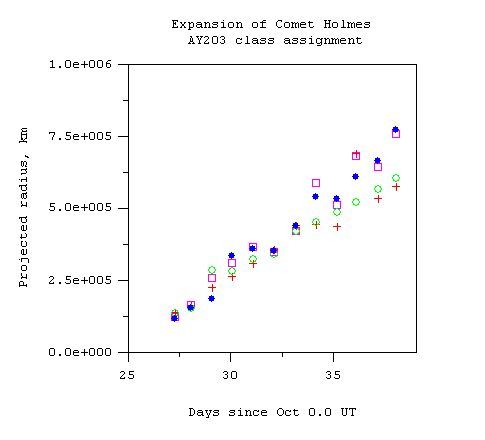
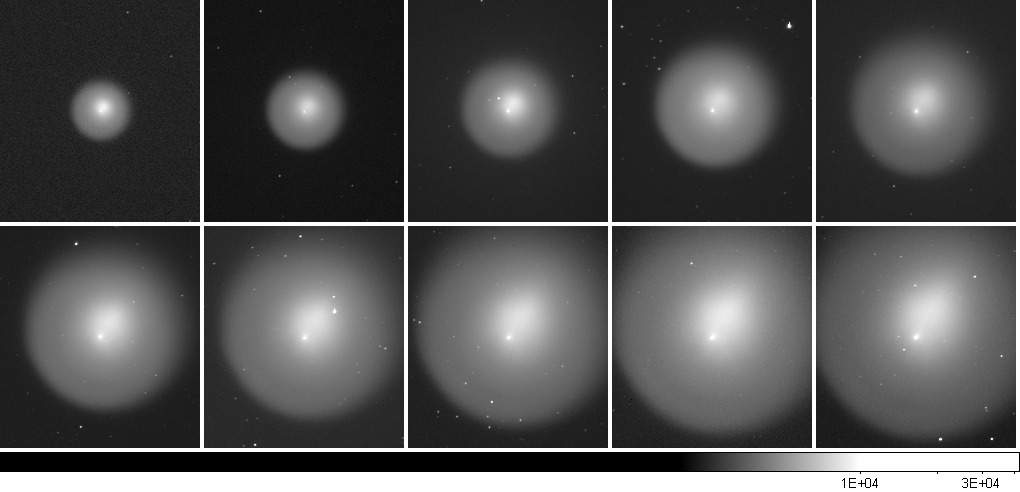 This series of 10 CCD images from the UA 16-inch telescope shows the expanding
dust from the unexpected outburst of Comet Holmes in October 2007
(nightly images from the evenings of October 26 - November 4). This ouburst
threw off so much dust that the reflected sunlight from the comet
increased a millionfold, making it a prominent naked-eye
object even in the presence of the full Moon and at a distance well
out in the asteroid belt. Each image spans 15 arcminutes (one quarter
degree, about half the apparent size of the full Moon) from north to
south. To get them posted quickly, these are all unprocessed images
straight from the telescope (except for dark-frame subtraction)
displayed on similar logarithmic intensity scales. South is at the top
and east to the left - these will eventually be replaced by
fully processed versions. The expansion has been analyzed using these
and later UA images, by students in
the Observational Astronomy class, who noted
a linear behavior with
expansion velocities 0.5-0.6 km/second
depending on direction.
This series of 10 CCD images from the UA 16-inch telescope shows the expanding
dust from the unexpected outburst of Comet Holmes in October 2007
(nightly images from the evenings of October 26 - November 4). This ouburst
threw off so much dust that the reflected sunlight from the comet
increased a millionfold, making it a prominent naked-eye
object even in the presence of the full Moon and at a distance well
out in the asteroid belt. Each image spans 15 arcminutes (one quarter
degree, about half the apparent size of the full Moon) from north to
south. To get them posted quickly, these are all unprocessed images
straight from the telescope (except for dark-frame subtraction)
displayed on similar logarithmic intensity scales. South is at the top
and east to the left - these will eventually be replaced by
fully processed versions. The expansion has been analyzed using these
and later UA images, by students in
the Observational Astronomy class, who noted
a linear behavior with
expansion velocities 0.5-0.6 km/second
depending on direction.
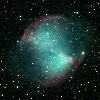
This color-composite CCD exposure of the Dumbbell Nebula M27 was done with the 0.9-m telescope of the SARA consortium, located on Kitt Peak, Arizona. Light of at different wavelengths traces distinct elements in different states of ionization, making such nebula powerful ways to probe the internal structure of the stars whose atmospheres have been blown away to produce them. For more SARA images from the public-outreach event at DragonCon 2007, see this page from the Space and Science track.
On the evening of March 28, 2007, the near-Earth asteroid 2006 VV2 drifted briefly in front of the bright spiral galaxy M81. Check out the picture and the movie.
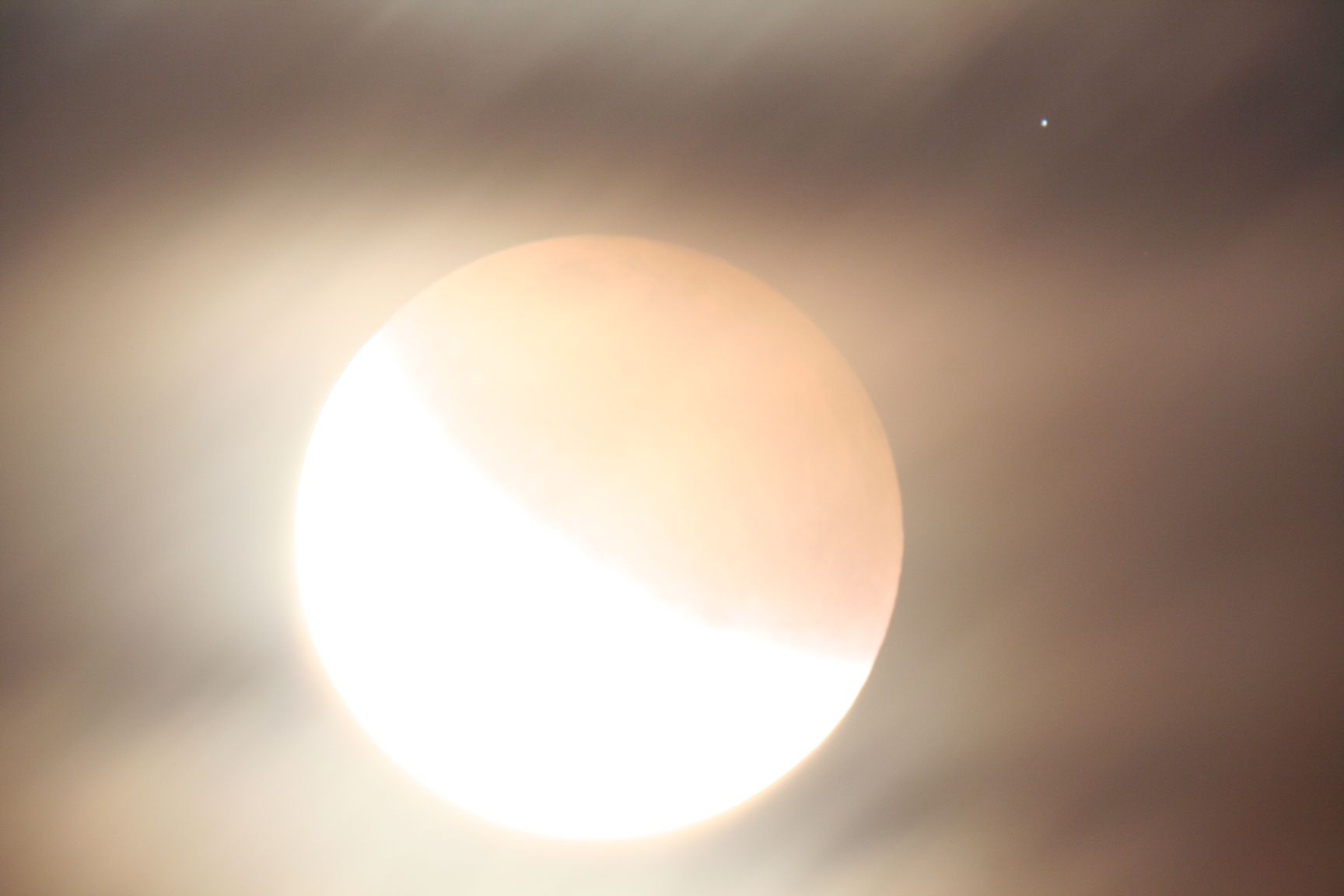
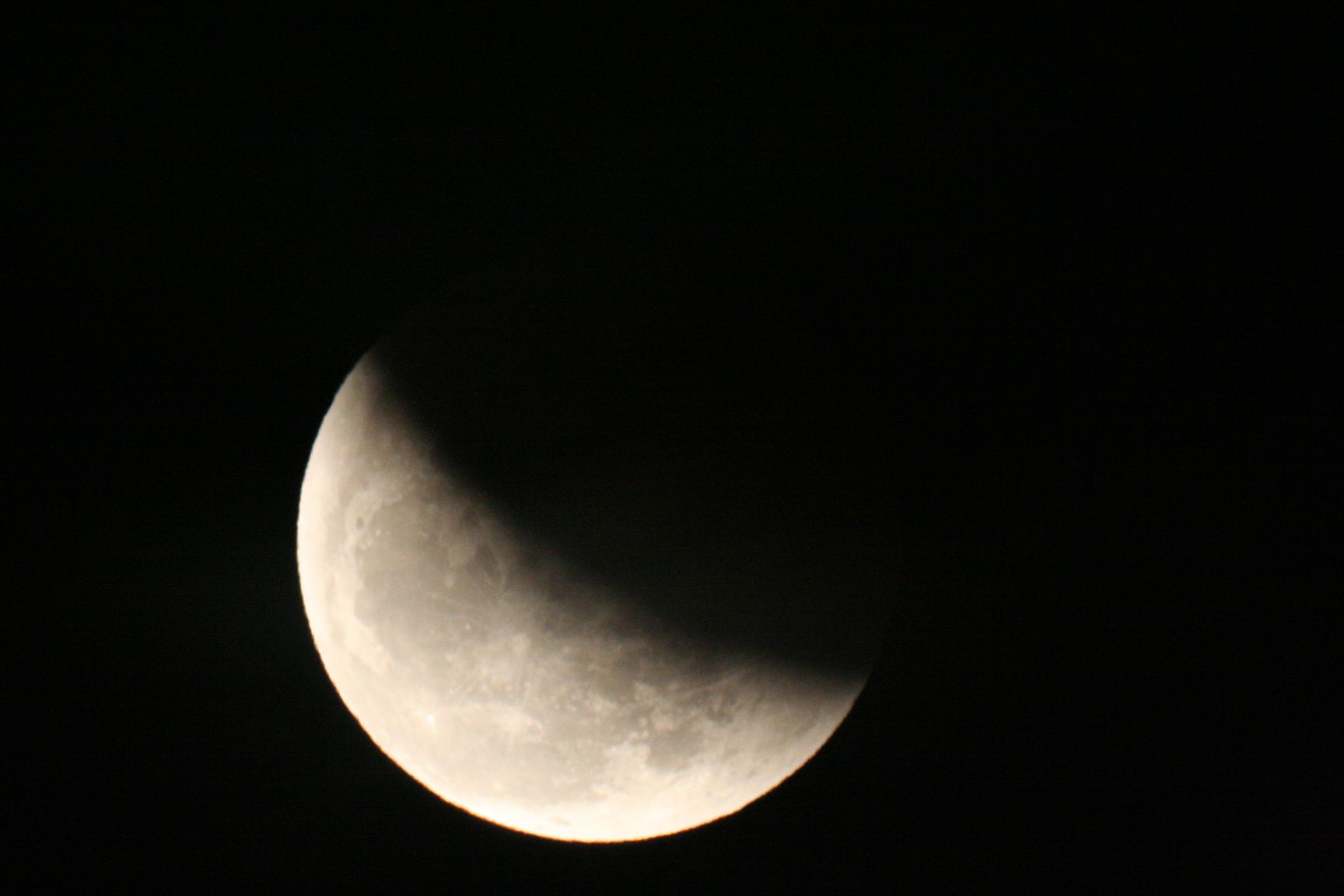
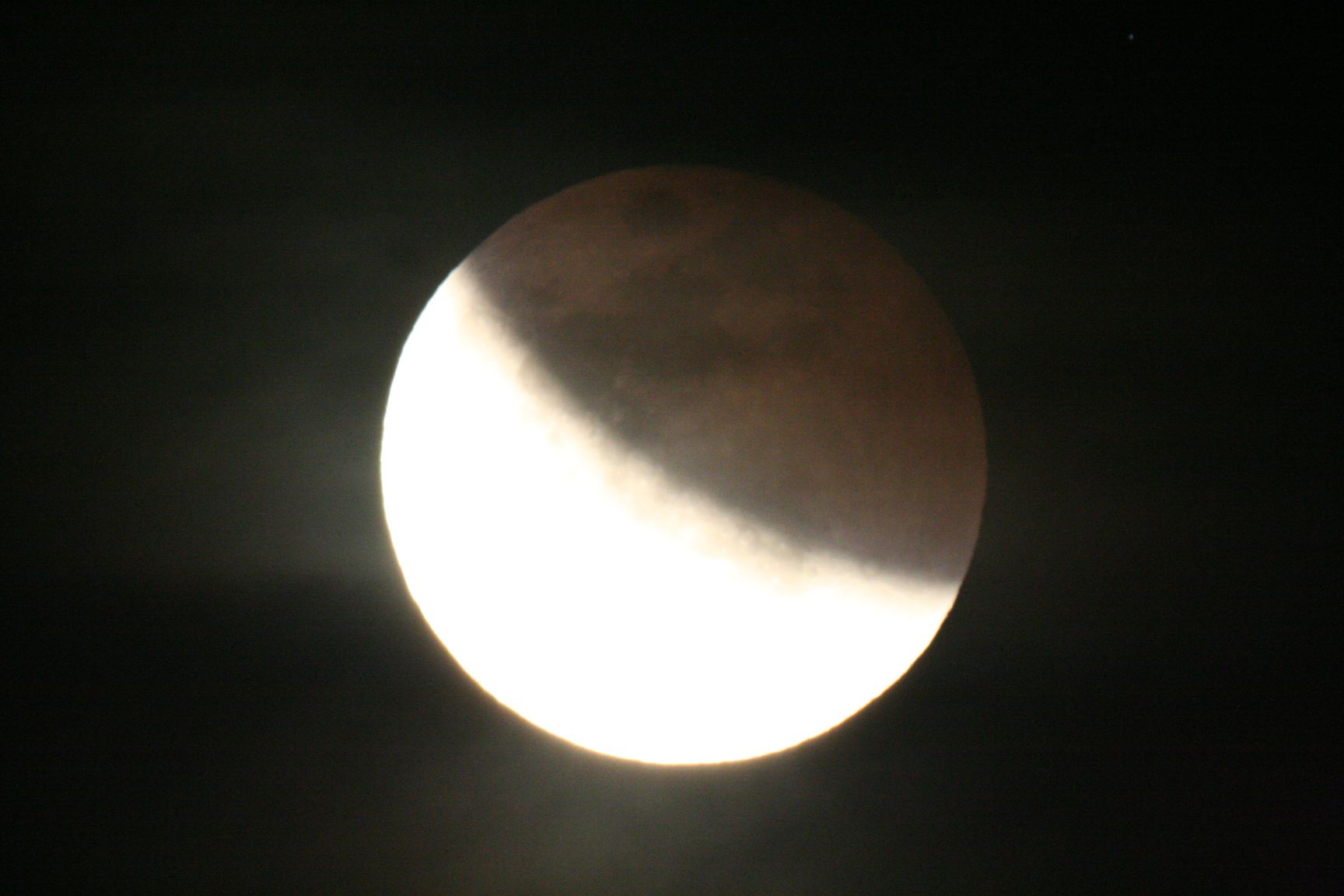 Several digital
shots of the lunar eclipse of March 3, 2007, through the 5-inch
guide telescope (taken during our public viewing session).
Totality had just ended by the time the moon
cleared some clouds and the dome's elevation limit. Some of the
clouds show up in the first image, along with a background star
which northern observers had watched pass behind the moon.
Several digital
shots of the lunar eclipse of March 3, 2007, through the 5-inch
guide telescope (taken during our public viewing session).
Totality had just ended by the time the moon
cleared some clouds and the dome's elevation limit. Some of the
clouds show up in the first image, along with a background star
which northern observers had watched pass behind the moon.
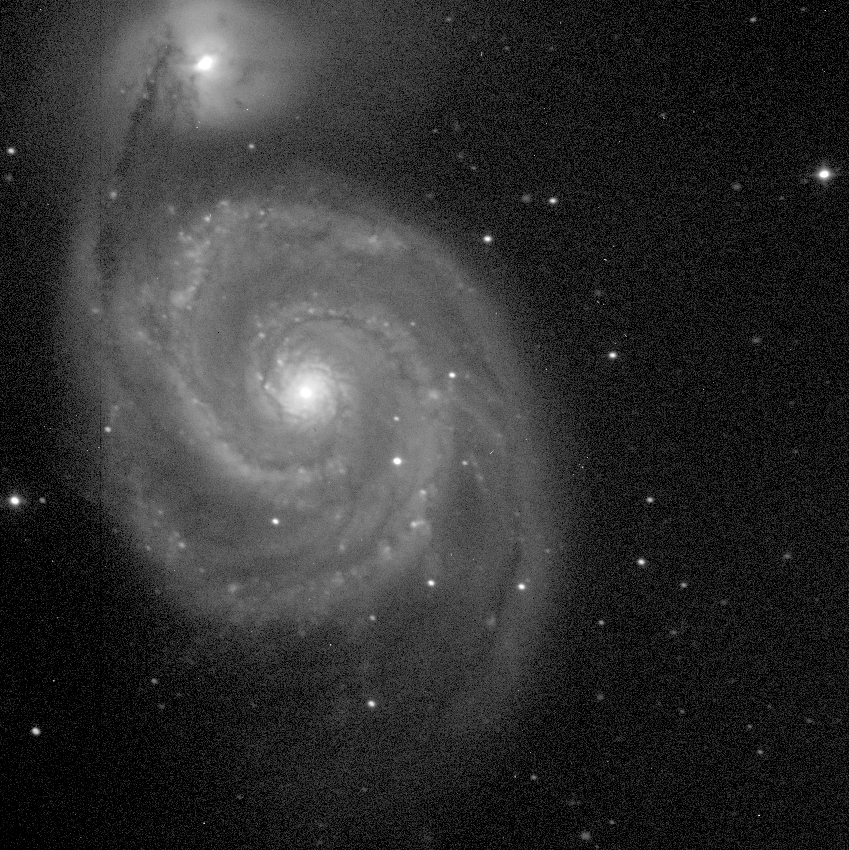
This 10-minute exposure of the interacting galaxy M51 (the Whirlpool Galaxy) was done with the 0.9-m telescope of the SARA consortium, located on Kitt Peak, Arizona. The combination of larger telescope and much darker skies from Arizona provide a fascinating view of this system, including intricate detail of the dust in the spiral arms, especially where a spiral arm of the large spiral crosses in front of the companion galaxy.
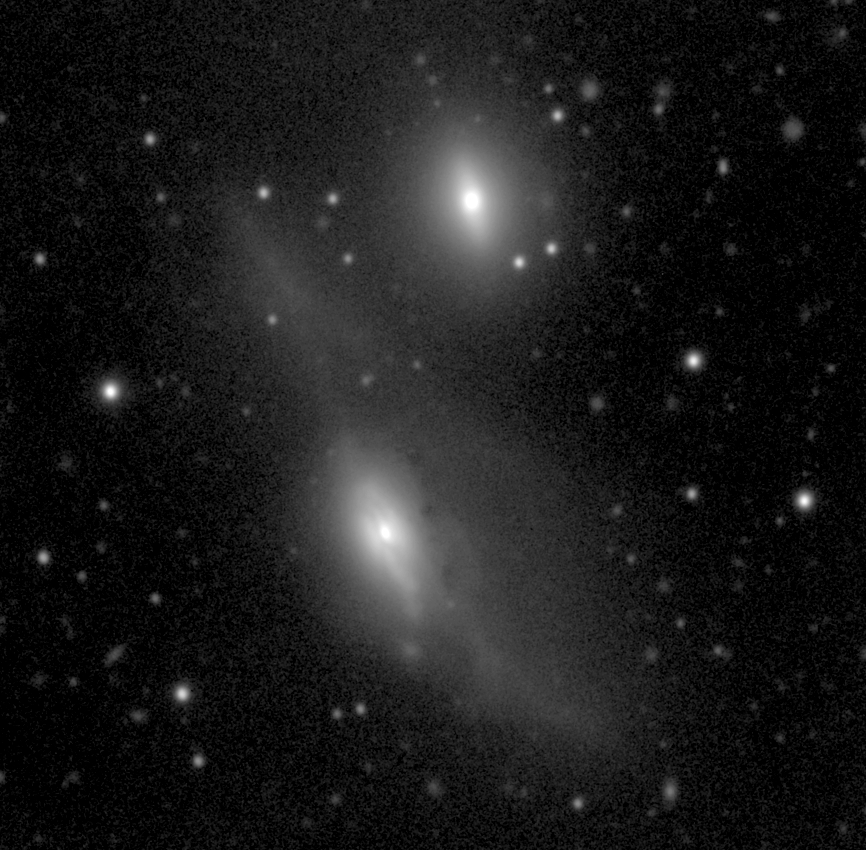
This 30-minute exposure shows the interacting galaxy pair NGC 4435/4438, part of the Virgo galaxy cluster, as observed using the 0.9-m telescope of the SARA consortium, located on Kitt Peak, Arizona. These galaxies are flying by each other within the cluster at a speed exceeding 1000 km/second, too fast for their gravity to make them merge. Instead, the fast approach will make for a hyperbolic passage, drawing material out to one side of the larger galaxy NGC 4438. Some of this gas and stars may be lost to the galaxy as further galaxies perturb the outcome.
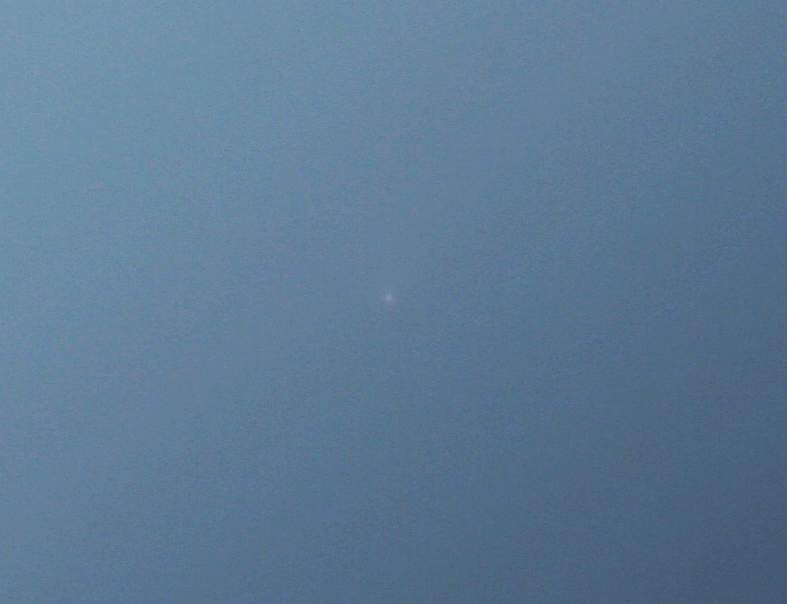
This is a daylight image of the nucleus of Comet McNaught, C/2006 P1, taken on January 9, 2007, when it appeared slightly less than 12 degrees from the sun. This image is cropped from a shot with a Canon digital SLR attached to the 5-inch guide telescope, and has been contrast-enhanced to reduce the effects of the bright sky.
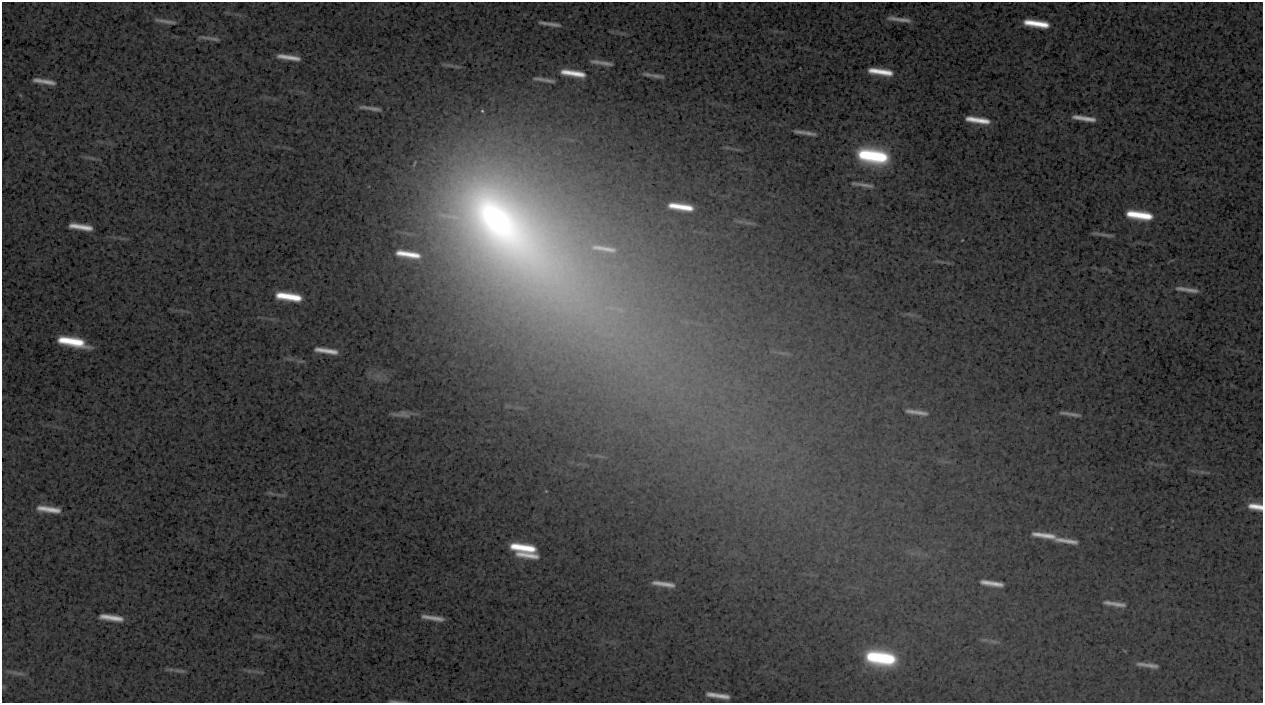
Breaking up isn't always hard to do. This view from May 1, 2006, shows the largest fragment of the disintegrating comet Schwassmann-Wachmann 3, nucleus C, and its tail, during the close approach to Earth of May 2006. Some of the fragments have been falling apart as we watch. The background stars trailed as the telescope tracked the comet during this 4-minute exposure. This comet was to have been a target for a close flyby of the CONTOUR mission, which was lost due to an explosion of a solid-rocket motor as it left Earth orbit.
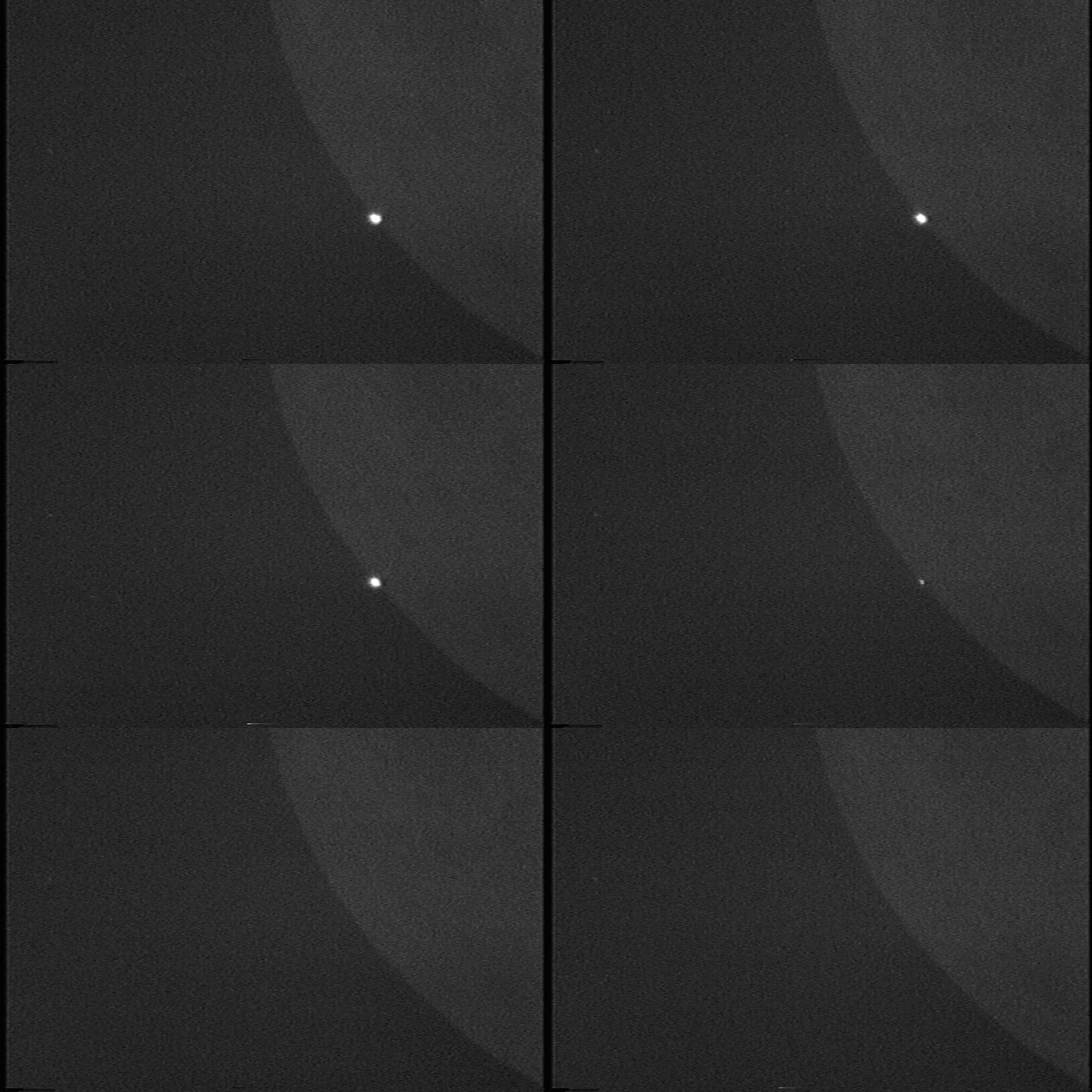
Now you see it, now you don't! Students in the UA
Observational Techniques course captured video of the Moon occulting
stars in the Pleiades star cluster on the evening of April 1, 2006
(no fooling). As the moon moved in front of the cluster, numerous stars
blinked out suddenly as the sharp edge of the airless Moon blocked each.
These frames are from a SuperCircuits surveillance camera used on the
observatory's 5-inch guide telescope. Click for
a full-frame view.
This sequence has been slowed down by about 8 times, showing the disappearance
of the cluster's brightest star, Alcyone or η Tauri.

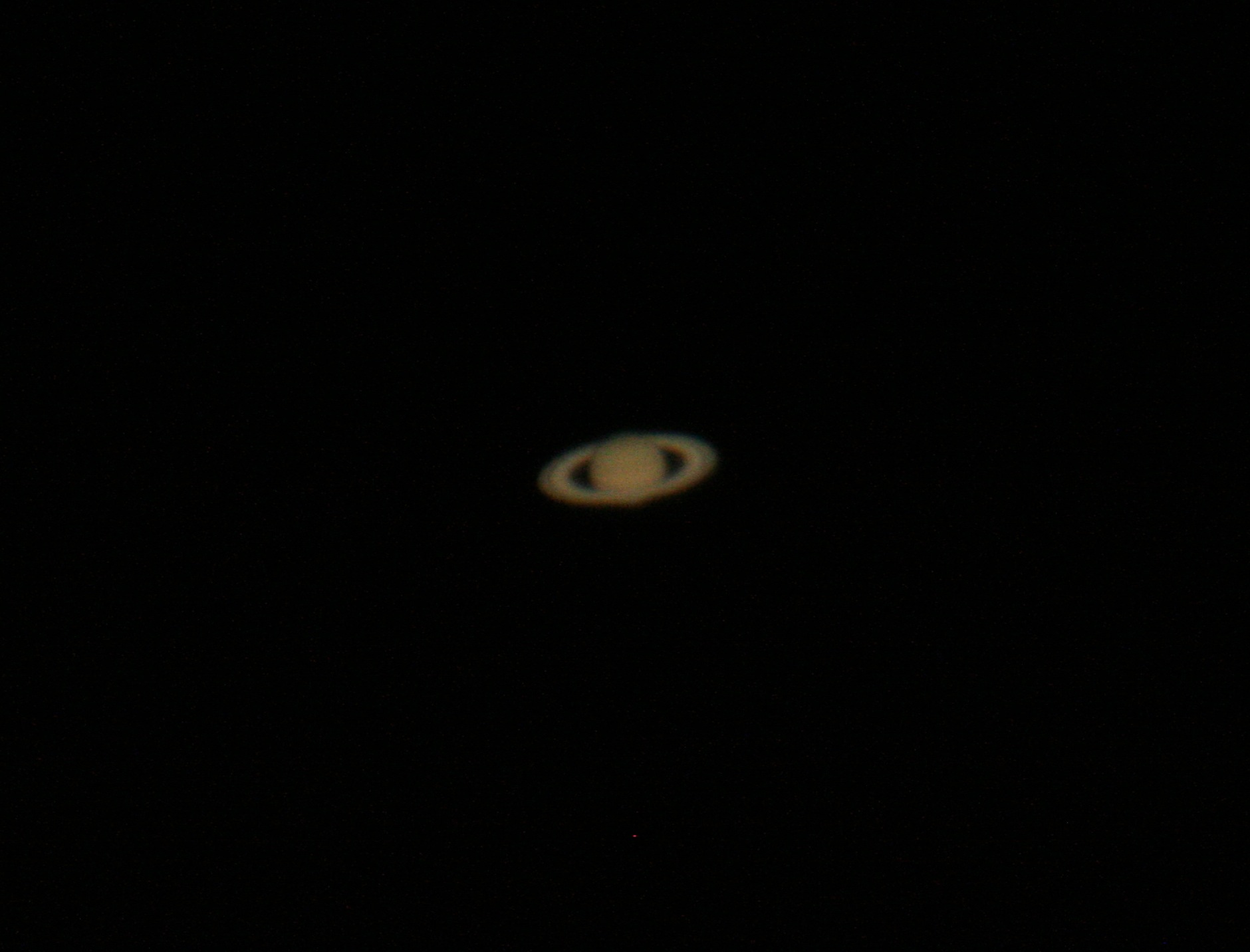
Saturn as imaged with the 16-inch telescope and webcam. The data were obtained during a class session of the AY433/533 course on the evening of April 1, 2006 (just after making video and CCD observations of the Pleiades star cluster being briefly covered by the Moon, as shown above). This image is an average of 179 webcam frames (the sharpest of about 1300), processed using wavelet sharpening. It shows the Cassini division separating the bright B ring from the dimmer A ring outside it, the still dimmer C ring where it crosses in front of the planet, cloud belts on Saturn itself, and the planet's shadow on the rings.
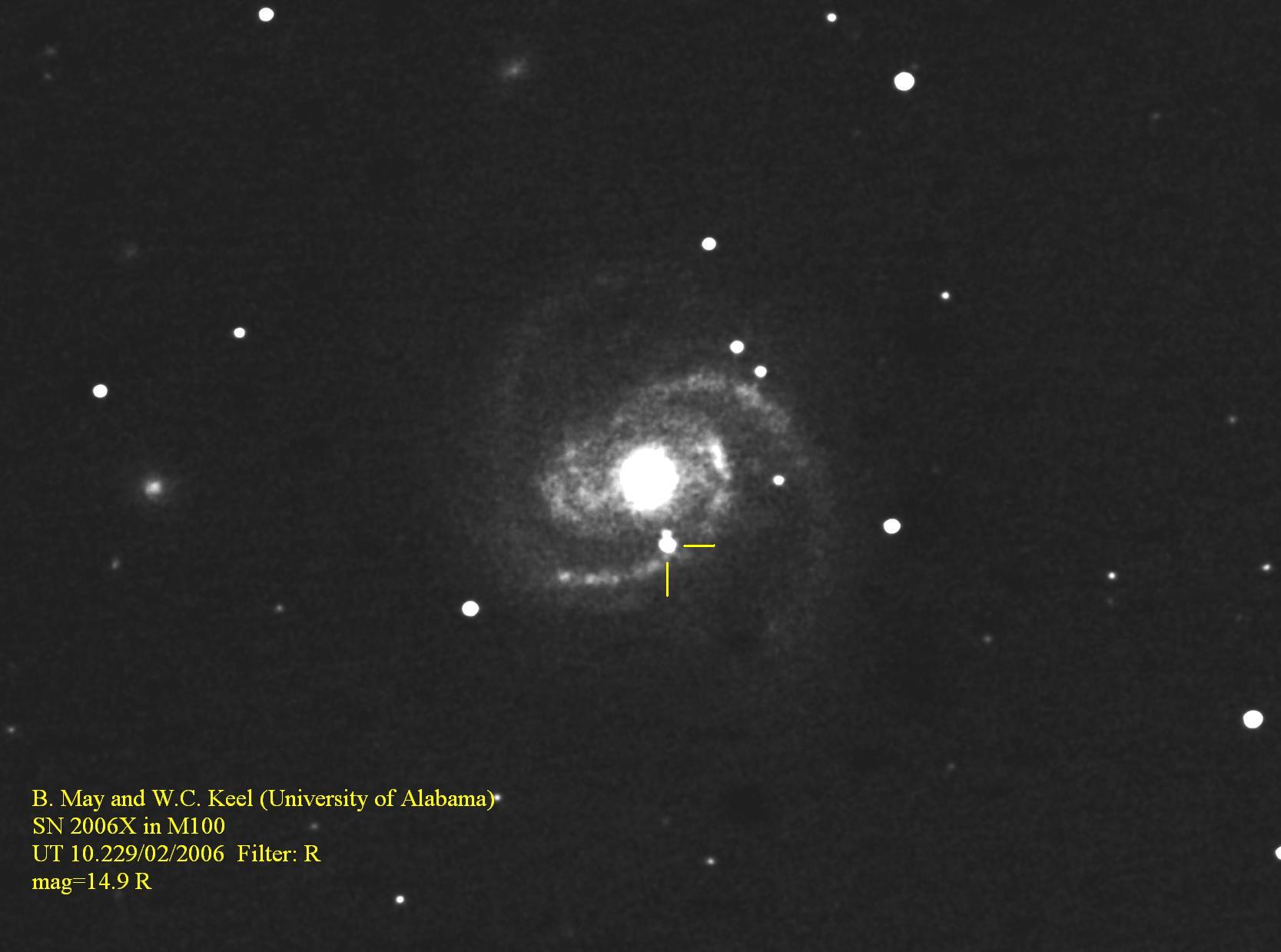
Supernova 2006X in the spiral galaxy M100 (NGC 4321), one of the brightest galaxies in the nearby Virgo cluster. This supernova explosion is particularly interesting, being of a type known as SN Ia. These explosions mark the destruction of white dwarf stars when a companion transfers so much additional gas onto their surfaces that they are no longer stable. All such supernova have nearly the same peak brightness, making them useful as standard markers for cosmological studies. It was the statistics of type Ia supernova that led many astronomers to conclude that the expansion of the Universe is accelerating. NGC 4321 was the first galaxy for which the Hubble Space Telescope was used to establish a distance based on variable stars, so SN 2006X may be important as a local calibration object. Image taken by graduate student Branyon May on the evening of February 9, 2006, as the recently-discovered supernova was still brightening.
 The returning
Stardust spacecraft, with its precious cargo of comet and
interstellar dust particles, tracked by the UA "Observational Astronomy"
class on the evening of January 14, 2006.
The returning
Stardust spacecraft, with its precious cargo of comet and
interstellar dust particles, tracked by the UA "Observational Astronomy"
class on the evening of January 14, 2006.
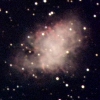 The
Crab Nebula, the expanding remnant of a supernova explosion
observed in A.D. 1054, in the first color-composite CCD image from the
UA 16-inch telescope. This is a combination of images taken in
blue, yellow, and red filters, originally obtained in December 2005 to
measure the
nebular brightness, in support of a proposal for Hubble observations
of dust in the nebula.
The
Crab Nebula, the expanding remnant of a supernova explosion
observed in A.D. 1054, in the first color-composite CCD image from the
UA 16-inch telescope. This is a combination of images taken in
blue, yellow, and red filters, originally obtained in December 2005 to
measure the
nebular brightness, in support of a proposal for Hubble observations
of dust in the nebula.
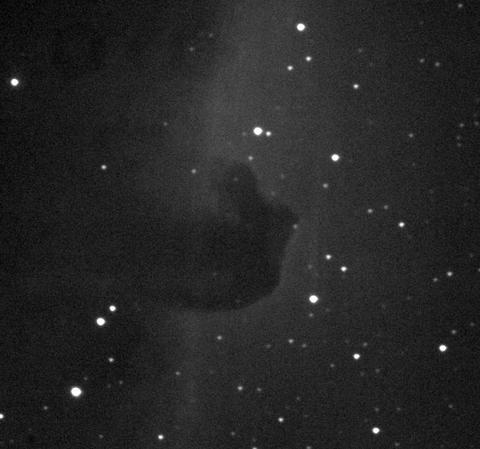 The
Horsehead Nebula in Orion, a dark cloud of dust and gas
seen absorbing the light of the glowing gas cloud IC 434. This
is a challenging thing to see telescopically even in very
dark skies, and we were gratified that our CCD system can
pick it out so well even through the glow of Tuscaloosa's
city light. This red-light image was obtained in December 2005.
The
Horsehead Nebula in Orion, a dark cloud of dust and gas
seen absorbing the light of the glowing gas cloud IC 434. This
is a challenging thing to see telescopically even in very
dark skies, and we were gratified that our CCD system can
pick it out so well even through the glow of Tuscaloosa's
city light. This red-light image was obtained in December 2005.
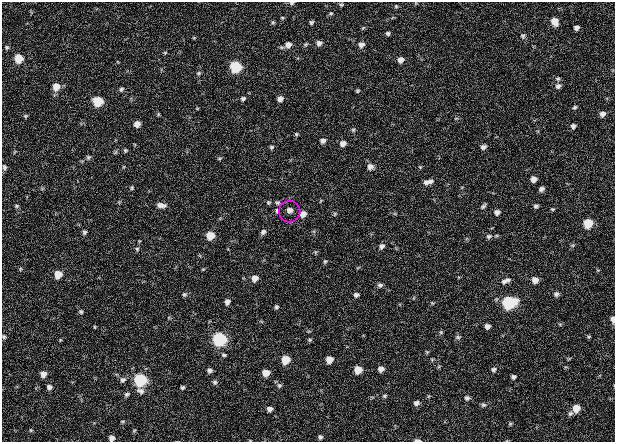 Pluto as seen against
the background stars on August 27, 2005. This completed a set
of observations of the nine "traditional" planets; the recently-found
possible "Planet 10" is dim enough that we're not sure we have it
on an image yet, awaiting better conditions.
Pluto as seen against
the background stars on August 27, 2005. This completed a set
of observations of the nine "traditional" planets; the recently-found
possible "Planet 10" is dim enough that we're not sure we have it
on an image yet, awaiting better conditions.
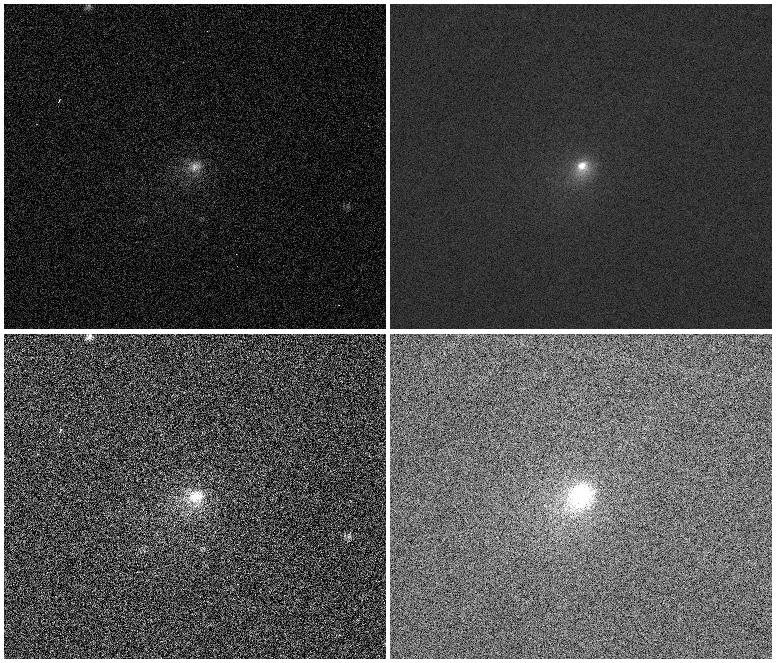 Comet Tempel 1 before and
after being struck by the Deep Impact probe. The left-hand images
show the view four hours before impact on the evening of July 3,
2005, at two different contrast levels. The right-hand images were
taken 24 hours later, and show the brightening of the comet's
haze from dust blown off by the impact. In particular, note the
arc of material which appears to the south (below the comet core).
Comet Tempel 1 before and
after being struck by the Deep Impact probe. The left-hand images
show the view four hours before impact on the evening of July 3,
2005, at two different contrast levels. The right-hand images were
taken 24 hours later, and show the brightening of the comet's
haze from dust blown off by the impact. In particular, note the
arc of material which appears to the south (below the comet core).
Last changes: August 2017Disclaimer